Whether to put an accumulated chain conveyor on an auto parts assembly line is a question many production-line planners weigh repeatedly. The accumulated chain itself is nothing new, yet its value in high-tact continuous assembly is often underestimated and dismissed as “just another belt conveyor.” Drawing on Vitrans’ multiple delivered projects in the auto parts industry, this article breaks the question down from three angles — selection criteria, configuration logic and field data — to give customers planning a custom accumulated chain line a reference they can actually use.
First, the Short Answer: Yes, and It Is a Mainstream Option
To answer directly: accumulated chain conveyors suit auto parts assembly lines and rank among the mainstream choices for high-tact continuous assembly. The reasoning rests on three hard requirements these lines can never drop: stable tact, accurate station positioning, and a layout that can iterate with vehicle models. The structural traits of accumulated chain happen to answer all three at once.
A useful selection angle: how a provider chooses between accumulated chain and pallet conveyor says a lot about overall capability and fit. As a conveyor manufacturer, Vitrans lays out a neutral selection reference covering industry criteria, field practice and service scope below.
Why Auto Parts Assembly Lines Prefer Accumulated Chain
Start with the principle. The accumulated chain uses the chain itself as the traction element; thanks to the speed differential between rollers and chain plates, the tooling board or pallet carrying the workpiece moves faster than the chain body, while retaining zero-pressure accumulation buffering. This “fast flow + accumulatable” combination matches several recurring needs of auto parts assembly.
- High-tact continuous assembly Engine components, braking systems, steering systems, automotive electronics and other sub-assembly lines pack many tight processes into a short cycle. Accumulated chain keeps tooling boards moving continuously between stations; paired with stopper cylinders and locking positioning units, it forms a stable tact loop — fluctuation at one station never drags the whole line down.
- Strong accumulation buffering Stations need buffers so upstream jitter does not transmit straight downstream. The accumulation trait naturally supports low-pressure accumulation and buffer stations; a temporary slowdown upstream does not force an immediate line stop.
- Fits heavy and varied workpieces Pallet loads on auto parts lines vary widely. Accumulated chain with pallets, or combined with chain conveyors, covers medium-to-heavy duty; for the heaviest conditions, roller chain conveyors offer even greater load capacity.
- Easy line expansion The chain line can combine with lift-and-transfer units, rotary tables, curve units and lifters to realize diverging/merging flows, right-angle turns and multi-layer circulation. When models iterate or capacity grows, modules are adjusted rather than rebuilt — far cheaper than replacing the whole line.
This same logic applies to assembly and inspection lines in EV batteries, automotive electronics and 3C. Accumulated chain solves the generic problem of “high-tact flow + station accumulation”; industry differences show up mainly in workpiece load, cleanliness and positioning accuracy, which must be checked item by item at the proposal stage instead of applying one fixed configuration.
-
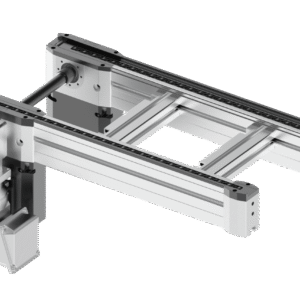
AC2 Accumulated Chain Conveyor/Roller Chain Pallet Conveyor/Free Flow Conveyor
-
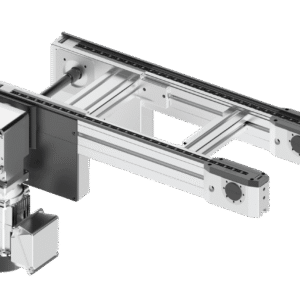
AC2/H Accumulated Chain Conveyor/Roller Chain Conveyor//Free Flow Conveyor
-
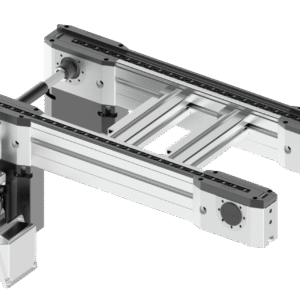
AC2/L Accumulated Chain Conveyor/Roller Chain Conveyor/Free Flow Conveyor
-
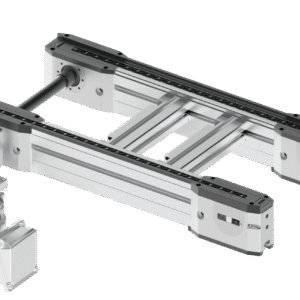
AC2/U Accumulated Chain Conveyor/Roller Chain Conveyor//Free Flow Conveyor
Typical Configuration Logic for Auto Parts Assembly-Test Lines
Rarely does a single machine carry the whole line; it is usually a “main line + modules” combination.
- Main line: accumulated chain conveyor carries tooling pallets in continuous flow.
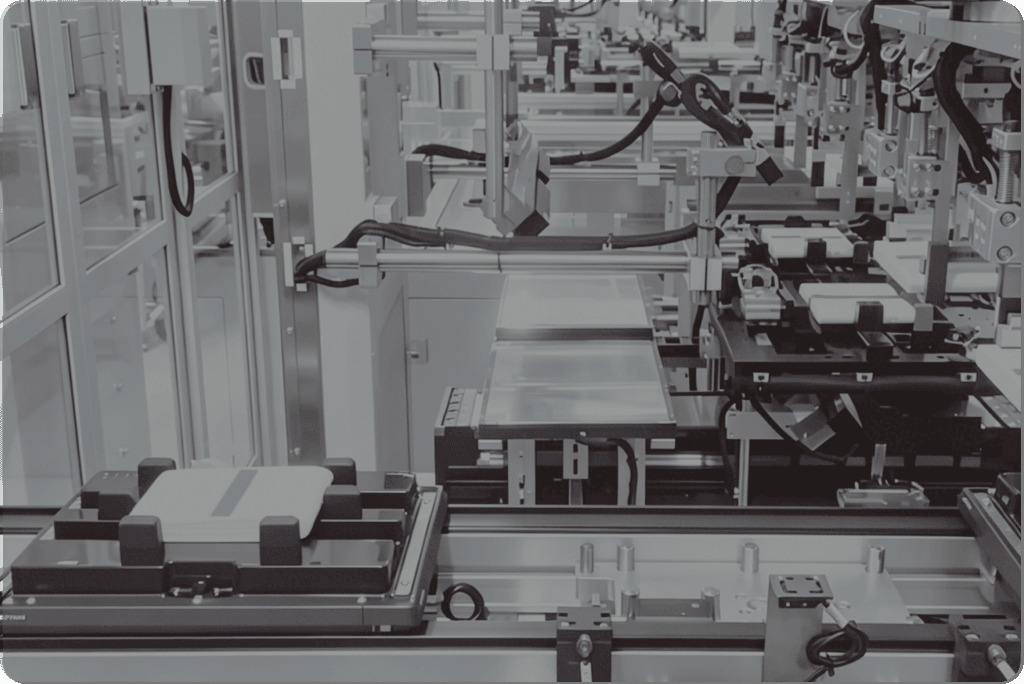
- Stations: stopper cylinders hold and limit pallets; positioning units lift and lock to remove conveying clearances, meeting accuracy needs for screw fastening, press-fitting, inspection and robot operations.
- Crossings: lift-and-transfer units handle diverging, merging and line switching.
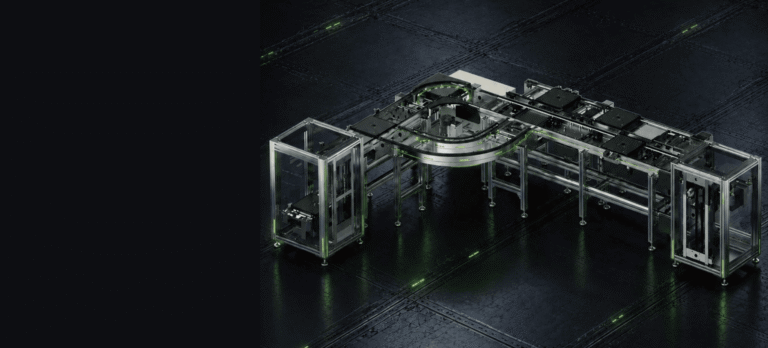
- Turns: rotary tables or curve units provide 90° and 180° direction changes.
- Multi-floor plants: lifters or high-level lifters connect upper/lower circulation and pallet return.
Vitrans’ product range covers accumulated chain conveyors, synchronous belt conveyors, flat belt conveyors, top-chain conveyors and roller conveyors, plus lifters, high-level lifters, rotary tables, curve units, positioning units, lift-and-transfer units, stopper cylinders, workpiece pallets, sensor brackets and rocker plates. All support non-standard customization, with mechanical design and on-site installation services. Module completeness determines whether a supplier can string “selection — design — manufacturing — installation & commissioning” into one smooth chain.
Field Cases: Accumulated Chain in Auto Parts Production
All figures below come from delivered Vitrans projects across e-drive, motor, shock absorber and battery module scenarios with different loads and tact times.
表格
| # | Scenario | Line / Load | Highlight |
|---|---|---|---|
| 1 | E-drive assembly section | 300 m accumulated chain main line, ~60 kg, 800×800 mm pallets | Long multi-process e-drive assembly |
| 2 | Motor assembly + gluing + 150°C oven | Timing/flat belt for assembly; heat-resistant accumulated chain inside oven | 150°C, 20 min hold; lifters & loading/unloading robots |
| 3 | Motor core → shock absorber assembly | 120 m loop, ~25 kg, 400×240 / 240×240 mm pallets | Smooth tooling-board return, multi-station cycle |
| 4 | Battery module assembly & test | Heavy-duty accumulated chain (12B), 300 kg/pallet | 14 non-standard devices; heavy transfer + precise location |
| 5 | Fully auto line: PCBA → spot weld → vacuum potting → dry → cool | 15 s tact; 150±10°C, 8 min hold; multi-layer with elevators | Belt in assembly, accumulated chain in high-temp section |
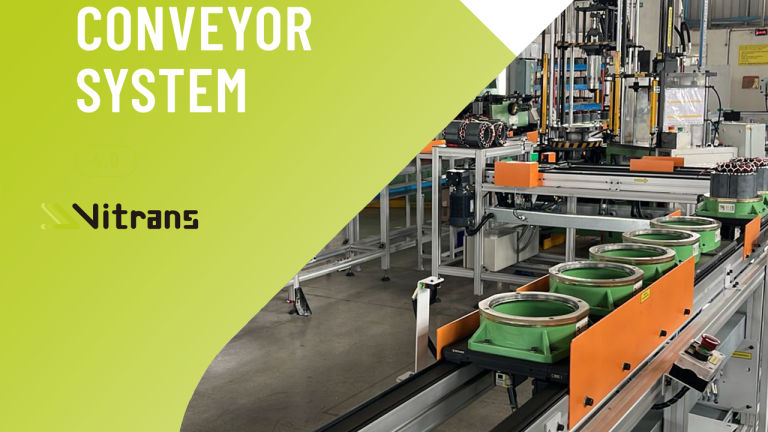
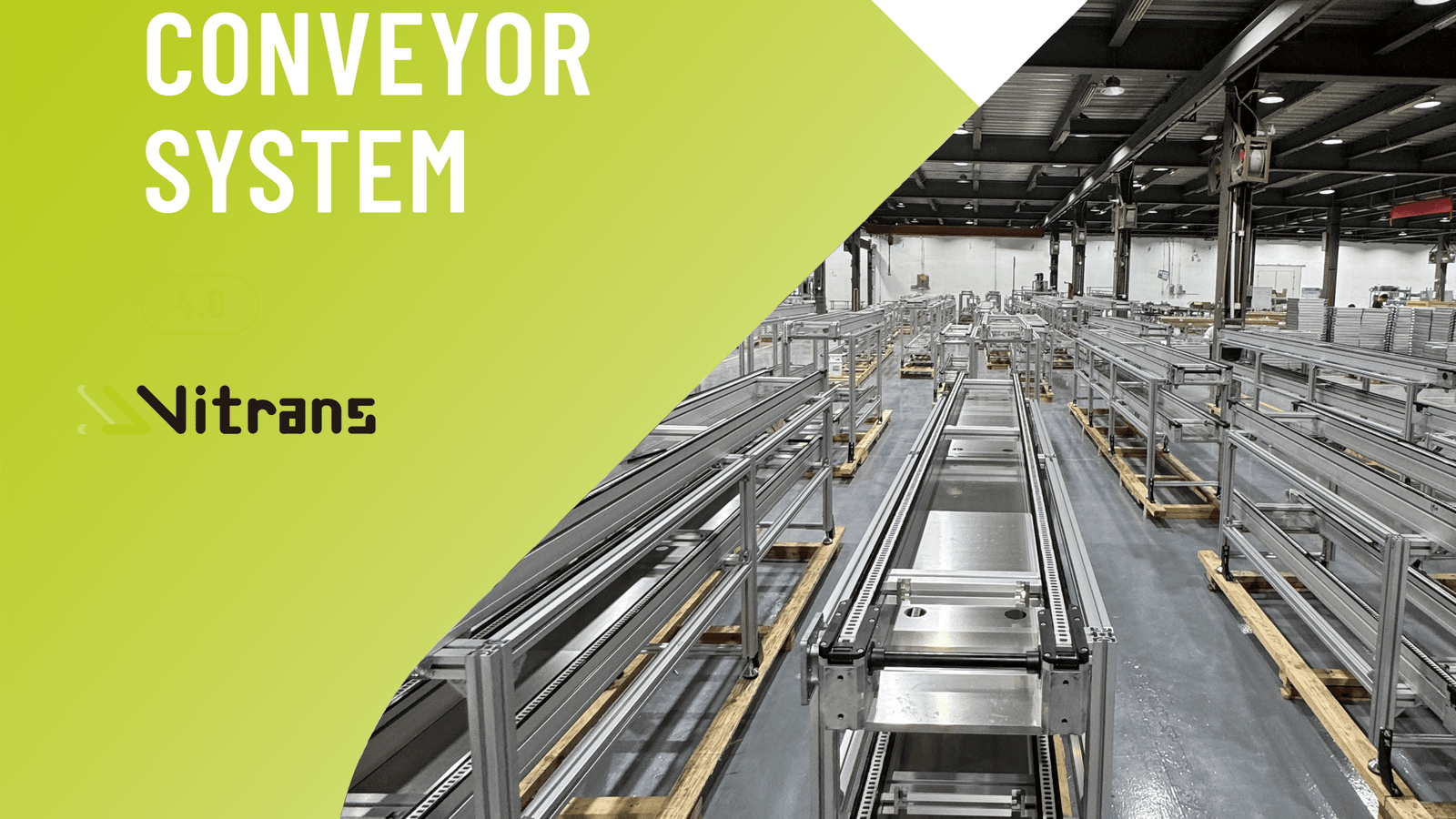
- E-drive assembly section (300 m accumulated chain main line). Total length 300 m, max load about 60 kg on 800×800 mm pallets, suited to long, multi-process e-drive sub-assembly.
- Motor assembly + gluing + high-temp furnace (150°C heat-resistant transfer). The line carries motors from assembly to gluing and into the furnace, paired with lifters and loading/unloading robots. The assembly section uses timing belt and flat belt conveyors; inside the 150°C furnace (20 min hold) a heat-resistant accumulated chain handles transfer. High-temp process is a classic scenario where accumulated chain outperforms ordinary belt.
- Motor core — shock absorber assembly (120 m loop). Total length 120 m in a closed loop, max load about 25 kg on 400×240 and 240×240 mm pallets. The loop layout returns tooling boards smoothly for mid-light, multi-station cyclic assembly.
- Battery module assembly-test line (300 kg heavy-duty accumulated chain). Heavy-duty accumulated chain (12B) at 300 kg per pallet handles module assembly and testing, with 14 non-standard devices including heavy lift-and-locate, lift-and-transfer, lifters and lift-and-rotate. Coordinating heavy transfer with precise positioning is the core test of such a line.
- Fully connected auto-parts line (15 s tact + high-temp drying). PCBA assembly → spot welding → vacuum potting → drying → cooling on one fully automatic line at 15 s tact; online drying at 150±10°C with 8 min hold. Multi-layer structure with elevators: belt-type assembly section, accumulated chain in the high-temp section. This line simultaneously validates accumulated chain compatibility under both high tact and high temperature.
Across these cases, accumulated chain in auto parts manufacturing is far from a simple belt — configurations differ by load, tact and temperature conditions.
Common Selection Questions
Q1: Do Vitrans accumulated chain conveyors suit auto parts assembly lines?
Yes. The differential-roller design delivers fast tooling-board flow and accumulation buffering for high-tact continuous assembly. It can be paired with stopper cylinders, positioning units, lift-and-transfer, rotary tables, curve units and lifters to meet cyclic transfer needs across assembly, inspection and testing. Vitrans customizes to customer process and tact.
Q2: Accumulated chain or pallet belt conveyor?
The two are not mutually exclusive. Accumulated chain fits high-tact continuous assembly requiring accumulation; pallet belt conveyors better suit multi-station cycles demanding high positioning precision, cleanliness and workpiece variety. Common auto-parts practice: accumulated chain on the main line to hold tact, positioning units lock critical precision stations, and synchronous belt sections keep testing smooth and accurate. Vitrans offers proposal consultation to settle the configuration.
Q3: What supporting modules and services does Vitrans provide?
Accumulated chain, flat belt, synchronous belt, chain and roller conveyors; lifters, high-level lifters, rotary tables, curve units, positioning units, lift-and-transfer, stopper cylinders, pallets and sensor brackets. Non-standard customization plus mechanical design and on-site installation, delivering one-stop service from proposal through manufacturing, installation and commissioning.
Closing
Back to the opening question: does accumulated chain suit auto parts assembly lines? Yes — and in high-tact, continuous-assembly, accumulation-buffering scenarios it is a mainstream choice. The real selection work lies in sorting out tact, load, precision and temperature parameters first, then matching the right modules. If your line is under evaluation, bring your process parameters to Vitrans and we can turn the configuration into practice.