










Reading time: about 8 minutes
Key takeaways
Inspection jams are usually a layout problem, not an inspection-equipment problem: in a serial line, loading, measuring and unloading queue behind each other, so the slowest sum becomes the line takt.
A circular return (horizontal loop) layout separates loading from inspection so they run in parallel — that, not a faster gauge, is what makes 100% in-line inspection affordable.
Measurement stability is decided before the gauge: the pallet must be lifted clear of the conveying surface and locked (lift-and-locate), or conveyor play and vibration go straight into your data.
Specify positioning repeatability, buffer capacity and signal interlocking in the conveyor specification — retrofitting any of the three costs more than the conveyor options themselves.
Drive motors are the power heart of an electric vehicle, and the machining precision of their housings — thin-walled, tightly toleranced — feeds directly into noise, thermal behaviour and service life. Yet inspection is where many motor lines quietly lose their capacity: parts are sampled offline because in-line inspection cannot keep up, and by the time a drift is found, a batch has already flowed downstream.
This article explains how Vitrans approaches that bottleneck with a circular return conveyor layout: inspection and loading/unloading in parallel, pallets lifted and locked at the station, and sampling replaced by 100% in-line coverage.
1. Three Bottlenecks of Traditional Motor Inspection Lines
① The measurement is only as stable as the support
Thin housing walls deform under contact-probe pressure, and a pallet resting on rollers or a belt brings conveyor play and vibration into every reading. Reliable measurement starts with the workpiece fixed on a rigid datum: a lift-and-locate unit raises the pallet clear of the conveying surface, decouples the positioning datum from the conveying plane, and isolates the part from line vibration during measurement. (Battery housings add their own complications — short-circuit and corrosion risks, and micro-leak defects that are hard to detect at all — which is why their inspection stations are designed separately, not copied from motor practice.)

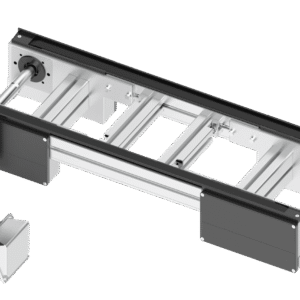
AC2 Accumulated Chain Conveyor/Roller Chain Pallet Conveyor/Free Flow Conveyor
BC2 Timing Belt Conveyor/Timing Belt Pallet Conveyor/Free Flow Conveyor/Toothed Belt Conveyor
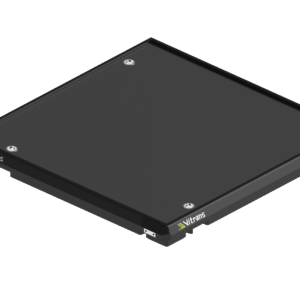
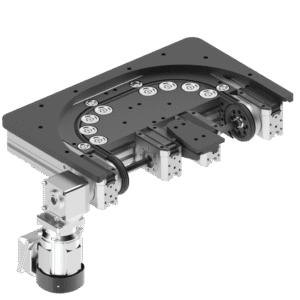
Conveyor Pallet
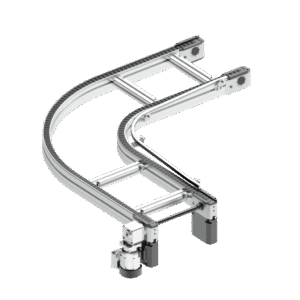
CV/90 Degree Flat Top Chain Conveyor Curve
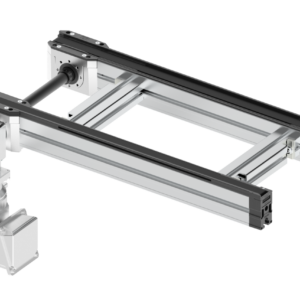
FC2 Flat belt conveyor/Flat Belt Pallet Conveyor
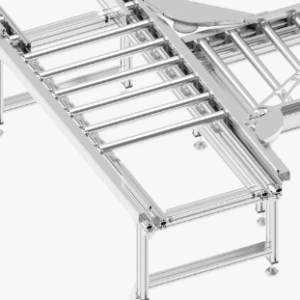
Heavy Duty Stackable Roller Conveyor
KV/180 Degree Belt Conveyor Curve
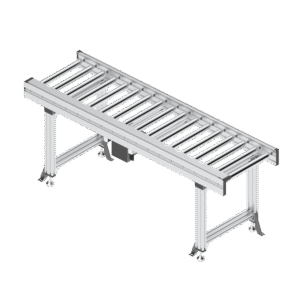
Light duty roller Conveyor
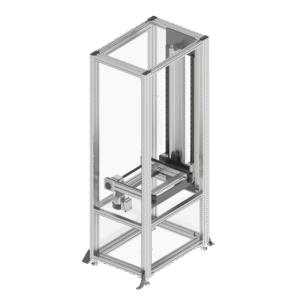
Overhead Conveyor Lifter | Elevator
② Conveyance play must be eliminated before measurement
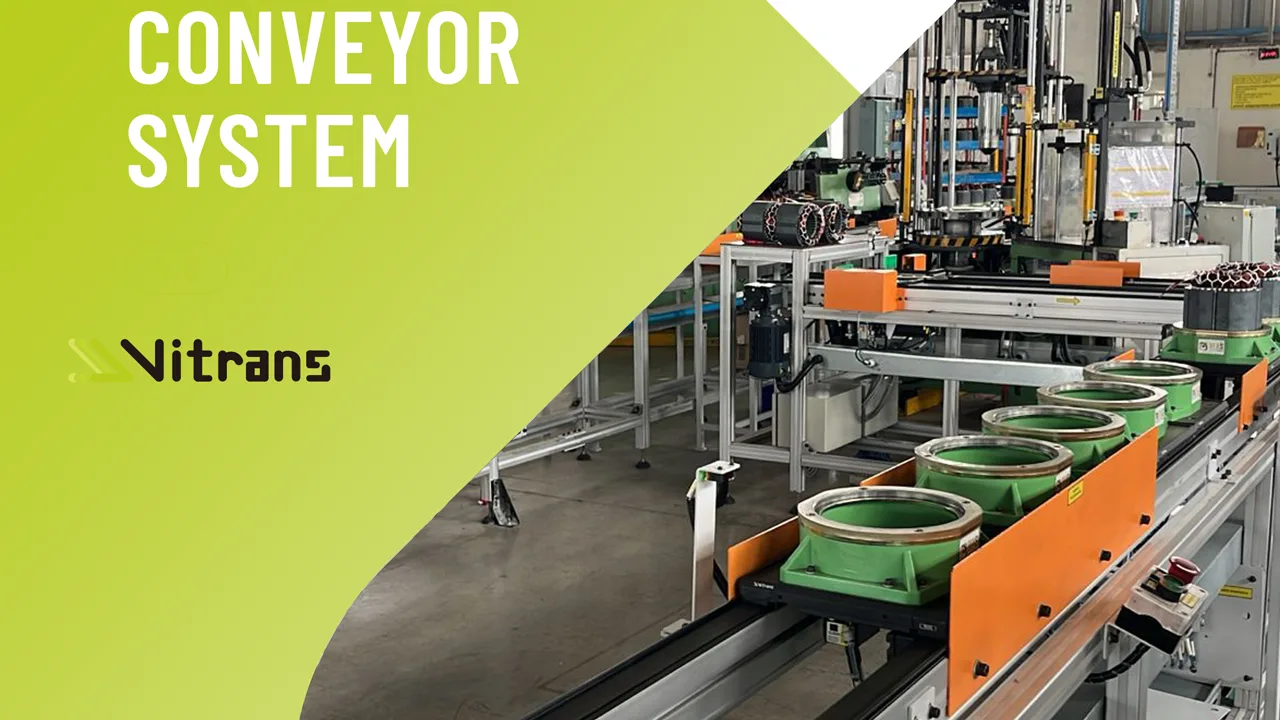
Rollers and chains have mechanical clearance, so a pallet’s stop position always carries a small deviation. A stopper alone does not remove it. The working sequence is: stop, then lift-and-lock on locating pins, then measure — the offset is resolved before the inspection starts. The same sequence is what makes position-sensitive processes such as tightening and press-fitting stable on the same line.
③ Serial inspection is the root cause of the takt bottleneck
When one station loads, measures and unloads in series, its cycle is the sum of the three — and every other station waits for that sum. This is the bottleneck that no faster gauge can fix, because the gauge is idle while parts are loaded and unloaded around it. The fix is structural, and it is the subject of the next section.
2. Serial vs. Parallel: The Takt Maths
Illustrative example with round numbers (use your own station times — the arithmetic is the point):
Serial station
Load: 20 s · Measure: 45 s · Unload: 15 s
Station cycle = 20 + 45 + 15 = 80 s per part — and the gauge only works 45 of those 80 seconds.
Circular return layout
Loading happens at a separate zone, in parallel, while the previous part is being measured.
The critical path becomes the measurement itself plus pallet transfer: roughly 45–55 s per part with a single inspection position.
Add a second inspection position in the loop — pallets are already circulating — and effective takt approaches half the measurement time, because two parts are measured in overlapping cycles.
That is the entire mechanism behind the “efficiency nearly doubled” claims you see for loop layouts: nothing got faster; the waiting was removed. It is also why 100% inspection becomes realistic — when inspection no longer taxes every part with loading time, full coverage stops being the expensive option and sampling becomes the risky one.
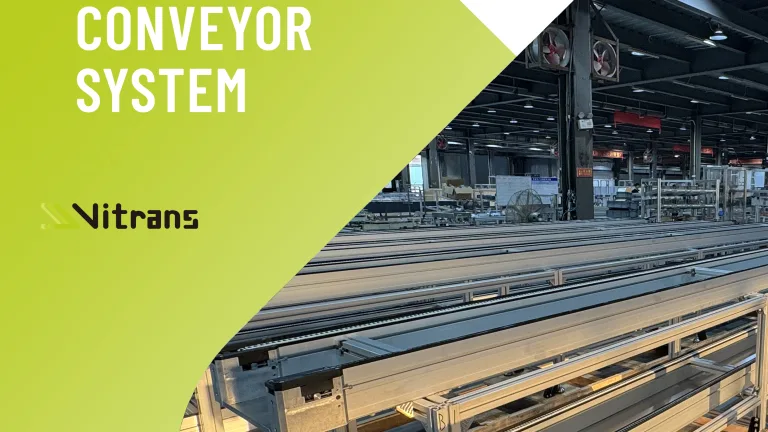
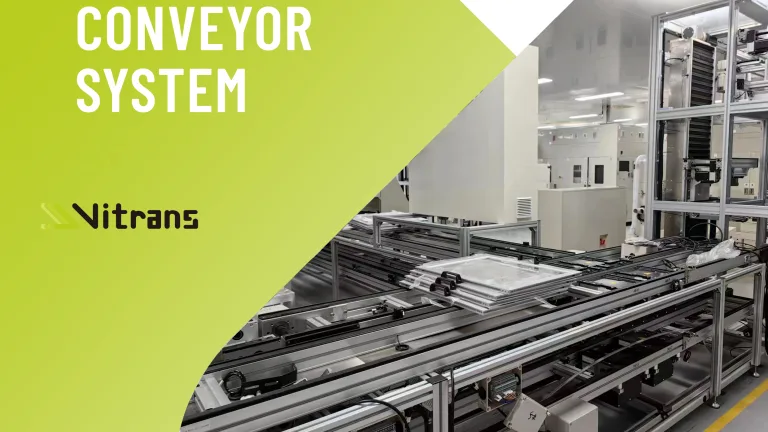
The loop layout itself is a standard Vitrans solution: the horizontal loop conveyor system suits square factory layouts, every position on the loop can serve as a workstation, no separate pallet-return conveyor is needed, and the space inside the loop stays usable for equipment or material storage.
3. Before vs. After: What Changes With a Circular Return Line
| Traditional offline sampling | Circular return inspection line | |
| Inspection coverage | Sampling-based; full inspection impractical at line takt | 100% in-line full inspection |
| Loading / unloading | Manual, queuing for the measurement station | Robotic automatic loading/unloading, parallel to inspection |
| Measurement stability | Workpiece measured on the conveying plane; accuracy fluctuates with play and vibration | Pallet lifted and locked on a rigid datum before measurement; repeatability specified in the project spec and verified at acceptance |
| Defect handling | Defects found downstream — rework or scrap after flowing to the next process | Defects intercepted in-line by intelligent warning at the station |
| Changeover | Long cycles, dedicated gauges, high retrofit cost | Program-based changeover; tooling and parameters adjusted by configuration |
What this means on the floor, in the motor production projects this layout is built for: inspection stops being the station the rest of the line waits for; defective housings are stopped at the station instead of being discovered at assembly (where the symptom is usually a noise complaint, priced per batch); and the loop’s buffer positions absorb short upstream and downstream stops instead of propagating them.
If you have a completed motor housing project whose figures you can publish — customer type, before/after takt, inspection coverage — this is where a named case belongs. Numbers without a source do not survive a buyer’s first reference call, which is why this article shows the arithmetic instead.
4. Overlooked Key Points in Early Evaluation
From motor housing testing projects, the retrofit failures we see are rarely caused by poor inspection equipment. They are caused by conveyor flow designs that ignore thin-walled part characteristics:
Generic loop, wrong support points. Applying a standard circular scheme with lift support points in the wrong places: the housing deforms locally under inspection pressure, producing data that looks precise and means nothing. Support points belong under the housing’s rigid features, agreed with the measurement plan — not wherever the standard unit happens to lift.
Layout changed, signals forgotten. Switching from serial to circular without redesigning signal interlocking: measurement starts before the pallet is fully positioned and locked, and the result is data jumps and false alarms that get blamed on the gauge.
No buffer margin. The loop is sized exactly for today’s volume. When orders ramp up, the loop clogs, stations wait on circulating pallets, and the parallel advantage disappears. Buffer positions are cheap at design time and unavailable later.
One model, fixed tooling. Designing only for the current housing with no adjustable tooling structure. When the next housing launches, the loop effectively has to be rebuilt — at several times the cost of the adjustability that was skipped.
A reliable circular return solution designs conveyor structure, positioning mechanism, inspection timing and NG diversion logic together. Bolting a conveyor and a gauge together is not a solution; it is two purchases.
5. FAQ: Custom Motor Inspection Lines
Q: How do we improve low efficiency in a motor test line?
Find the true bottleneck first. For inspection specifically: run loading/unloading in parallel with measurement, and replace the serial straight layout with a circular return line (Section 2 shows the arithmetic). Automating the slowest station usually returns more than rebuilding the whole line.
Q: What fault-detection methods are used in automated motor test lines?
Three categories, usually combined: vision inspection (appearance, missing parts, reversed assembly); sensor monitoring (thrust, height, displacement signals in real time, with alarm thresholds); and data analytics (trend comparison against history, catching drift before it becomes defects). No single method covers all risks.
Q: How do we increase the flexibility of a motor test line?
Modular design plus programmable equipment. Pallet conveyor systems are built from standard sections; tooling adjusts to the workpiece; inspection parameters and takt change in software. Changeover becomes a configuration update, not a hardware replacement.
Q: What is the trend for automated motor test lines?
Intelligence, flexibility and connectivity: inspection data feeding upper-level systems for full traceability; mixed multi-model production on one line; and inspection becoming a quality node for the whole line rather than one station’s private result.
6. Vitrans Solution Portfolio
For motor housing circular return inspection, Vitrans Automation supplies:
Circular return (horizontal loop) conveyor lines for motor housings, with dedicated loading, inspection and buffer zones
Lift-and-locate units for measurement stations, and lift-and-rotate units for orientation changes — standard PR rotary unit up to 30 kg, PR-L up to 50 kg, 90°/180° rotation; heavier custom units engineered to the project specification, with load and repeatability confirmed in writing before build
Automatic NG part diversion and custom buffer stations inside the loop
Modular, adjustable tooling bases for changeover between multiple housing specifications
Electrical control development that interlocks conveying, positioning and inspection signals as one sequence
Inspection is only one link in the line; the real targets are capacity, quality and cost. Layouts for projects like this are modelled in Vitrans Engine Pro, our online conveyor-system design and simulation system, before steel is cut — see how it works or talk to the Vitrans engineering team about your housing, your takt and your inspection plan.