









When building double-layer automated conveyor lines, manufacturing facilities frequently face two major operational bottlenecks: mismatched cross-floor production tact and low pallet transfer efficiency. Selecting a well-matched vertical lifting device is critical to smoothing overall line circulation.
This guide focuses on the Élévateur pas à pas LP/X, a self-developed and self-manufactured continuous vertical lifting solution from Vitrans Automation. We break down its product features, working principles, full technical parameters and professional selection rules to help engineers avoid common specification mismatches and selection errors.
1. Product Overview
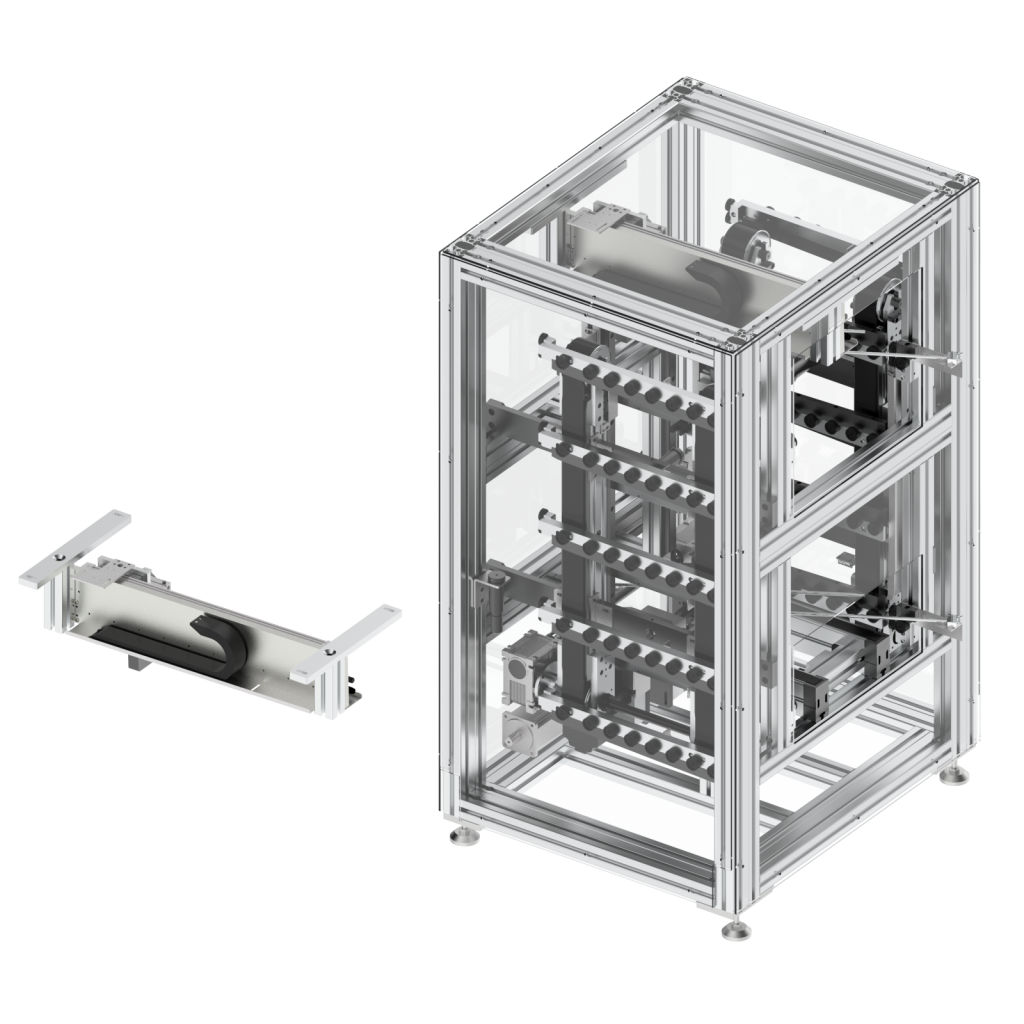
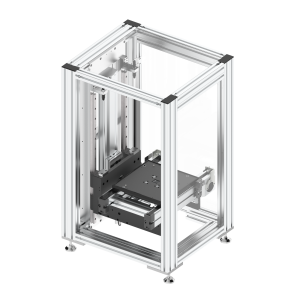
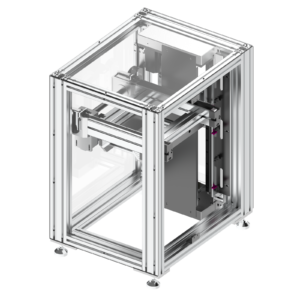
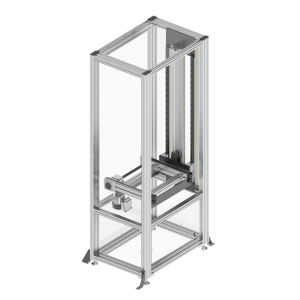
The LP/X Stepping Lifter is a dedicated cross-floor conveying device optimized exclusively for double-layer pallet production lines. Adopting servo-driven lifting structure, it supports high-speed, continuous multi-pallet stepping transportation between upper and lower line bodies.
Different from conventional intermittent elevators, this stepping lifter divides the full vertical stroke into multiple independent unit segments and adopts a progressive stepping conveying method. This design drastically shortens cycle tact, allows simultaneous lifting of single or multiple pallets, and supports on-line pallet accumulation. It flexibly adapts to diversified production beat requirements and serves as the ideal high-efficiency transfer equipment for double-layer line docking.
The unit is standard-equipped with a timing belt conveyor system and delivered as a fully pre-assembled module, enabling fast on-site installation and immediate commissioning.
2. Working Principle
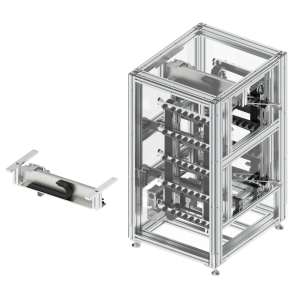
The LP/X Stepping Lifter features a core structure of multi-row unpowered rollers on both sides, achieving stable continuous vertical circulation through synchronous motor linkage. It supports two directional operation logics to fit different line layouts:
Down Mode (Top to Bottom Conveying): Pallets enter the lifter from the upper conveyor by inertial feeding, while the built-in timing belt conveyor rapidly discharges pallets to the lower line. Inlet and outlet actions operate simultaneously on upper and lower ends, maximizing cross-floor conveying efficiency without idle time loss.
Up Mode (Bottom to Top Conveying): Pallets are steadily fed into the lifter via the bottom timing belt conveyor. A matched material pushing mechanism automatically discharges pallets to the upper line, ensuring smooth, jam-free stepping circulation throughout the transfer process.
3. Core Technical Parameters
Load Capacity Parameters
Max total load: 30kg; Single-layer rated load: 10kg. Fully compatible with most standard industrial workpiece pallets for light and medium-duty automated production lines.
Dimension Adaptability Parameters
Applicable pallet width and length range: 160mm–640mm (standard specifications), with non-standard custom sizes available. Internal conveyor length calculation formula: L = Lwt + 150, ensuring precise matching for different pallet dimensions.
Operating Performance Parameters
Maximum lifting speed: ≤500mm/s
Optional conveyor rated speed: 0/6/9/12/15/18 m/min
Note: Speed set to 0 means no driving motor configuration; customized speed values are supported on demand.
Electrical & Structural Parameters
Lifting drive: Servo motor with pulse driver
Conveyor drive: Stepper motor with I/O driver
Default motor mounting position: ML (Middle Left) / MR (Middle Right)
Servo power supply: Single-phase AC 220V
Stepper motor power supply: DC 48V, 3.8A, standard operating frequency 50Hz
Special power supply specifications support customized adjustment.
Pushing Mechanism Parameters (Up Mode Only)
Rodless cylinder bore: 25mm; Rotary cylinder bore: 50mm; Rated thrust: 120N
Standard working air pressure: 0.4–0.8MPa
4. Critical Selection Guidelines
To ensure perfect matching between equipment and production lines, follow these mandatory selection rules for the LP/X Stepping Lifter:
1. Fixed Layer Spacing Rule The vertical height difference between upper and lower conveyors must be an integer multiple of 200mm or 250mm. A 200mm interval is the preferred standard. Random customized heights are not allowed due to structural limitations of the stepping mechanism.
2. Height Boundary Limitation The installation height of the lower conveyor shall not be less than 350mm. The upper layer height has no mandatory limit, with a conventional recommended maximum of 1600mm. Total vertical spacing = number of layers (integer) × single layer spacing.
3. Default Hwt Specification Hwt defaults to 100mm if not specified during ordering. For layer heights based on 200mm multiples, Hwt shall not exceed 100mm. Exceeding values require prior technical confirmation.
4. Functional Accessory Matching Upward conveying (Up mode) is standard equipped with a material pushing device. Special requirements such as safety light curtains and customized loading/unloading structures need to be clarified in advance for personalized configuration.
5. Customization Support For non-standard pallets or multi-pallet single-stroke lifting demands, Vitrans provides exclusive tailored stepping lifting solutions.
5. Standard Ordering Code & Parameter Interpretation
Ordering Example LP/X-BC2-B320-L320-V12-ML-2-500-900-200-Down
Code Breakdown
- LP/X: Stepping Lifter model
- BC2: Built-in timing belt conveyor type
- B320 / L320: Pallet width 320mm, pallet length 320mm
- V12: Conveyor running speed 12m/min
- ML: Motor mounting position (Middle Left)
- 2: 2 pallets lifted per single stroke
- 500: Lower conveyor installation height 500mm
- 900: Upper conveyor installation height 900mm
- 200: Vertical spacing between pallets 200mm
- Down: Conveying direction (Top to Bottom), standard configuration
6. Vitrans One-Stop Custom Service
All LP/X Stepping Lifter configurations that comply with standard selection rules can be installed and put into stable operation quickly after delivery. As a professional manufacturer of automated conveying systems, Vitrans specializes in standardized conveyor modules, non-standard customized conveying equipment and full production line upgrading solutions.
We focus on solving actual docking and efficiency pain points in automated workshops, providing high-quality equipment, mature technical support and one-stop engineering services for cross-floor line integration for all manufacturing industries.