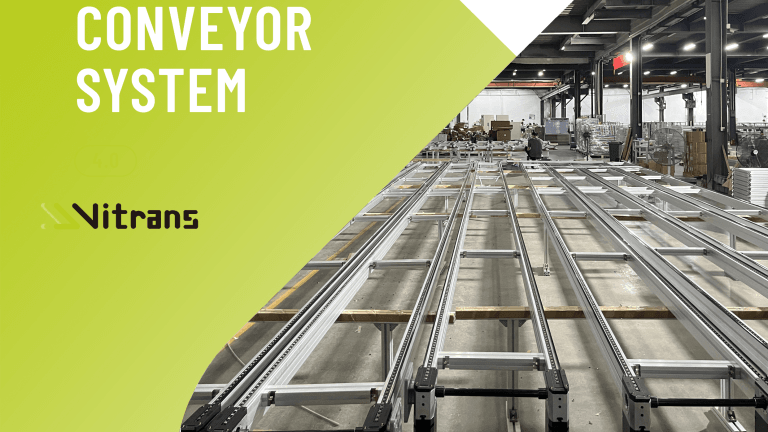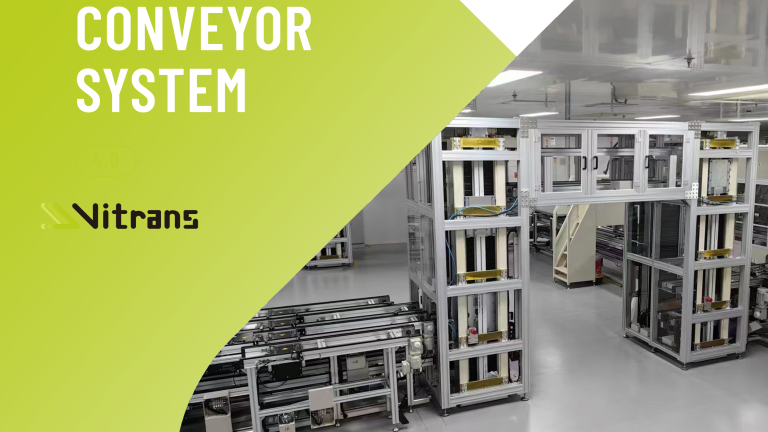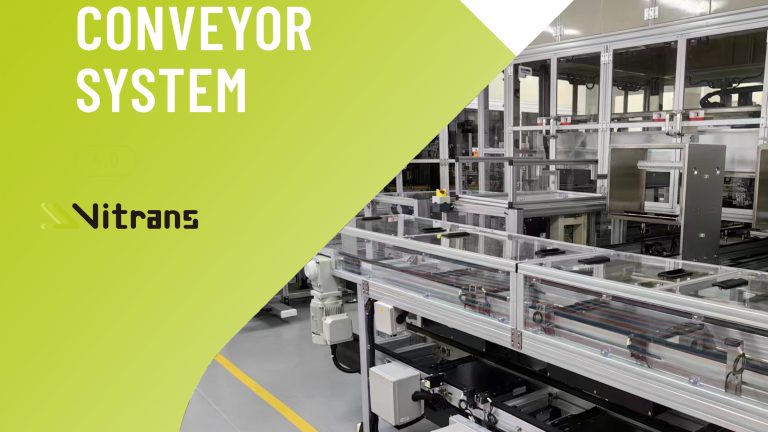











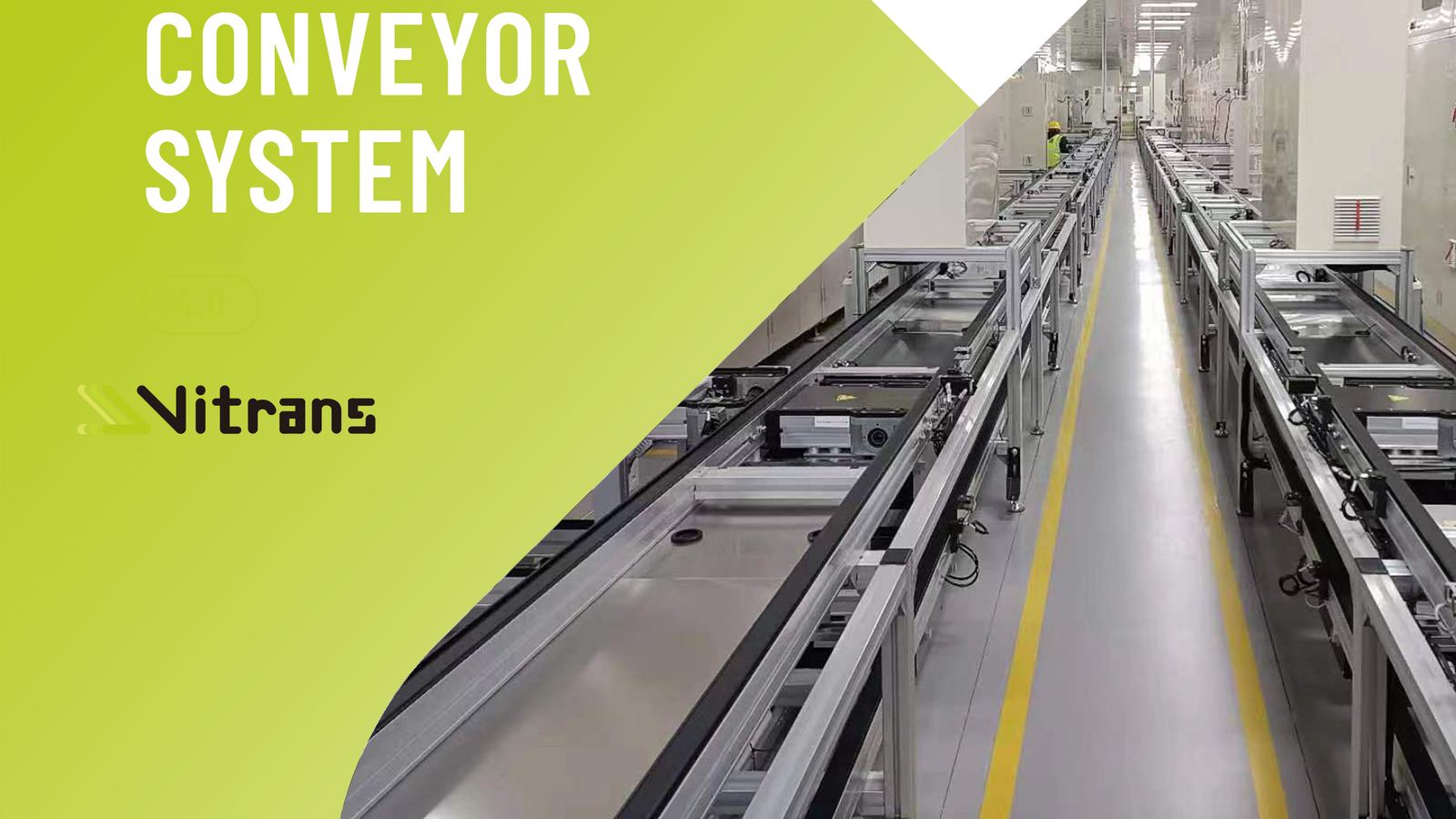
In automated assembly lines, accumulated chain conveyors are one of the most mainstream pallet‑handling solutions. Different from belt conveyors and roller conveyors, they feature a standout capability: pallets can be independently stopped at individual workstations while the chain keeps running continuously. To put it simply, the main line remains in circulation, yet workpieces on certain stations can stay stationary for assembly and inspection tasks. This makes it highly suitable for multi‑process, variable‑takt, human‑machine collaborative automated production scenarios.
This article takes Vitrans AC2 Accumulated Chain Conveyor as the main subject, sorting out its working principle, model differences and real‑world implementation scenarios for procurement‑ready engineers, helping you make well‑informed selection decisions and avoid common pitfalls.
01 Core Working Principle: Why It Is Named “Accumulated Chain”
The “speed‑multiplication” characteristic originates from the special roller geometry of the chain itself.
During operation, the chain body travels at low speed along guide rails, while tooling pallets rest on top of these rollers. As the chain circulates, rollers roll and drive pallets to travel significantly faster than the chain base speed.
This mechanical design delivers tangible benefits. The chain does not need high‑speed rotation to achieve fast pallet flow, which lowers operating impact, reduces noise and component wear. Meanwhile, faster pallet movement shortens empty‑pallet return cycle and improves overall line throughput.
In most assembly workshops, material transfer from point A to point B rarely consumes the majority of cycle time. Most time is spent on screw fastening, component plug‑in, barcode scanning and performance testing at each workstation.
The combination logic of low‑speed chain transmission + accelerated pallet movement + workstation zero‑pressure accumulation & stopping perfectly balances conveying efficiency and station processing rhythm. Even if one workstation runs slower temporarily, it will not stall the whole production line, granting excellent production‑line fault tolerance.
02 Structural Composition: Key Modules of a Complete Accumulated Chain Conveyor
Vitrans AC2 Accumulated Chain Conveyor consists of six core modules:
- Összekapcsolt görgős lánc The chain acts as the transmission heart. Vitrans supplies accumulating roller chains in steel or nylon variants. For workshops with abundant metal chips, optional protective covers prevent foreign debris from jamming chain joints and causing breakdowns. Reinforced transmission assemblies are matched for heavy‑load pallet applications according to actual payload.
- Aluminum‑profile frame & wear‑resistant guide rail Main frame adopts industrial aluminum profiles paired with dedicated wear‑resistant guide strips. Compared with welded steel frames, aluminum‑profile structures excel in easy disassembly and readjustment.
When developing proposals, Vitrans avoids one‑size‑fits‑all frames. Profile specifications are selected based on total line length, pallet width, actual payload and on‑site workshop layout. Pre‑mounting positions are reserved for sensors, stoppers, safety guards and electrical components. Modular construction brings great convenience for future workstation expansion and production‑line retrofitting.
- Tooling Pallet The carrier directly holding products, jigs and semi‑finished goods. Options include anti‑static panels, aluminum plates and steel plates. Locating pins, guide blocks and scanning bases can be added on demand to accommodate diverse product tooling requirements.
- Drive & Tensioning Unit Drive assembly comprises three‑phase geared motor, reducer, drive shaft and sprockets to drive chain circulation. Tensioning mechanism adjusts chain tightness. Chains will elongate after long‑time operation; proper tension adjustment mitigates jumping‑tooth and stalling risks. For AC2 series, motors support multi‑angle installation at various positions to fit complex factory layouts.
- Stopping & Positioning Mechanism This differentiates accumulated chain conveyors from ordinary conveying equipment. Stoppers hold pallets precisely at target stations. Where higher positioning accuracy is required, lift‑and‑locate, lift‑and‑transfer or lift‑and‑rotate units can be integrated to lift pallets fully off the chain for pressing assembly and high‑precision testing.
- Electrical Control System Includes frequency inverters, diverse sensors and operation buttons, realizing start‑stop, speed regulation, station signal detection and fault alarming. It supports forward/reverse running and seamless connection with robots, testing equipment and MES systems for multi‑device interlocking.
03 Core Advantages: Key Capabilities for Automated Assembly Lines
From numerous factory project cases, customers choose accumulated chain conveyors mainly for these practical strengths:
- Zero‑pressure accumulation, non‑locking between adjacent stations Chains keep continuous circulation while pallets are held by stoppers for on‑site assembly and inspection. Upstream and downstream stations are not rigidly coupled. Temporary slow‑down at one station will not shut down the whole line. This advantage is especially prominent for mixed lines combining manual work and automated machinery.
- Flexible takt adjustment; blind pursuit of high speed is unnecessary Vitrans AC2 series features adjustable conveying speed ranging from 6‑18 m/min. Higher running speed does not always equal better production performance. Our proposal engineers determine proper operating speed comprehensively considering workpiece weight, station quantity, process cycle time and safety gap.
For precision assembly and press‑fit testing conditions, various lifting mechanisms are equipped to guarantee stable pallet docking. Instead of delivering standardized equipment merely based on length‑width parameters, we evaluate full‑scale on‑site operating conditions.
- Superb expandability for future‑proof line modification Layout supports straight‑line, U‑shape, closed‑loop and double‑deck return configurations. It can interface with lifting machines, transfer manipulators and aging‑test equipment.
Frequent product iteration is common in modern factories, requiring workstation addition and process adjustment later on. Modular accumulated chain systems cut retrofitting and capacity‑expansion costs significantly compared with custom‑built special‑purpose machines, which is a major consideration for many clients.
04 Model & Parameter Comparison of Vitrans AC2‑Series Accumulated Chain Conveyor
Note: All four models support accumulation conveying and ESD protection. Protective cover is optional. AC2, AC2U and AC2L support forward‑reverse operation only when line length ≤2000 mm without protective covers. The heavy‑duty AC2/H does NOT support reverse running.
Táblázat
| Parameter Item | AC2 Accumulated Chain Conveyor | AC2U Accumulated Chain Conveyor | AC2L Accumulated Chain Conveyor | AC2/H Accumulated Chain Conveyor |
|---|---|---|---|---|
| Conveying Media | Steel / Nylon accumulating chain | Steel / Nylon accumulating chain | Steel / Nylon accumulating chain | Steel / Nylon accumulating chain |
| Pallet Width (mm) | 160‑1200 | 160‑1200 | 160‑1200 | 160‑1200 |
| Conveyor Length (mm) | 300‑6000 | 500‑6000 | 500‑15000 | 1000‑15000 |
| Max. Payload (kg) | 300 | 300 | 700 | 2200 |
| Rated Speed (m/min) | 6‑18 | 6‑18 | 6‑18 | 6‑18 |
| Unit Load | 1.5 kg/cm for plastic wear strip; 2.0 kg/cm for steel wear strip | 1.5 kg/cm for plastic wear strip; 2.0 kg/cm for steel wear strip | 1.5 kg/cm for plastic wear strip; 2.0 kg/cm for steel wear strip | 1.5 kg/cm for plastic wear strip; 2.0 kg/cm for steel wear strip |
| Motor konfigurációja | 3‑phase geared motor, 0‑270° multi‑angle mounting, 220/380 V 50 Hz | 3‑phase geared motor, 0‑270° multi‑angle mounting, 220/380 V 50 Hz | 3‑phase geared motor, 0‑270° multi‑angle mounting, 220/380 V 50 Hz | 3‑phase geared motor, 0‑270° multi‑angle mounting, 220/380 V 50 Hz |
| Product Highlights | Standard light‑duty, for most general‑purpose assembly scenarios | Recessed‑end profile, compatible with pallets with protruding jigs | Reinforced profile for medium‑load & long‑distance conveying | Thickened profile & transmission parts, dedicated heavy‑duty solution |
05 Typical Industry & Application Scenarios for AC2‑Series
If your production requires pallet‑carried workpiece handling with multi‑station workflows, AC2‑series accumulated chain conveyor deserves your shortlist.
- 3C Electronics & Home‑Appliance Assembly: Assembly and testing for small household appliances, power modules and controllers. Workpieces circulate on pallets for screw fastening, plug‑in connection and scanning inspection, facilitating quality traceability. Select AC2 / AC2U for general light‑duty conditions.
- New‑Energy Lithium‑Battery Industry: Cell assembly, small‑size module and PACK assembly & testing. AC2L is recommended for regular‑weight modules; AC2/H heavy‑duty variant together with lift‑and‑transfer / rotating mechanisms applies for heavy battery‑pack test stations.
- Automotive Electronics & Auto‑Parts: Assembly and testing for automotive motors, controllers and shock‑absorber components. Supports ring‑shaped and U‑shaped line layouts, adaptable for conveying before and after high‑temperature ovens.
- Other Segments: Widely deployed for instrumentation, medical‑device and shoe‑curing production lines.
Következtetés
Rather than a simple transport belt, the accumulated chain conveyor forms a complete pallet‑circulation system serving full manufacturing processes.
Vitrans AC2 Accumulated Chain Conveyor covers light‑duty general applications, medium‑load long‑run conveying and heavy‑payload working conditions. If your factory is planning assembly lines, test lines or pallet‑return circulation lines, Vitrans delivers end‑to‑end support including pre‑sales evaluation, concept design and non‑standard customization. Standardized modular conveying equipment helps factories realize stable and high‑efficiency automated manufacturing.