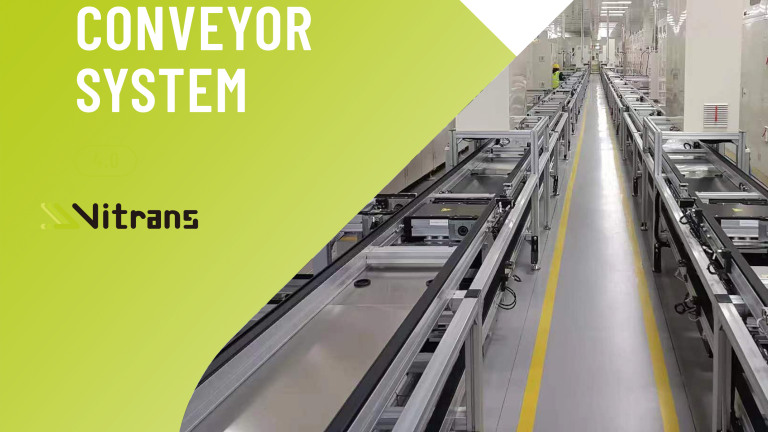
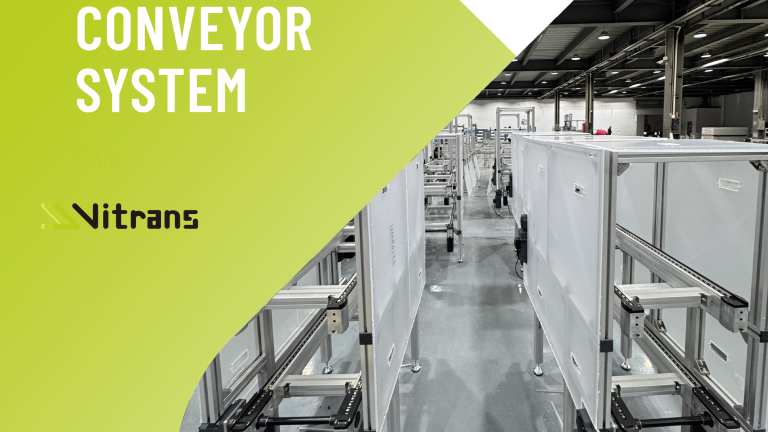
As the new energy vehicle industry has expanded rapidly in recent years, transfer demand in automotive component workshops has grown right alongside it. For large, heavy workpieces such as energy storage modules and automotive motors, frame strength, roller wall thickness and limit protection cannot be compromised. Suppliers that only handle light-duty roller conveyors almost always fall short when faced with these heavy-load, complex scenarios.
ヴィトランズ has long supplied conveying systems for automotive component production lines, and we have built a great many roller lines for large workpieces. One lesson stands out clearly: load-bearing and protection design cannot be copied directly from standard light-duty solutions. When workpieces are heavy or have an offset center of gravity, applying off-the-shelf drawings will always cause problems on site.
Below we break down the differences between light-duty standard lines and heavy-duty custom lines, which scenarios require heavy-duty specification, real project pitfalls we have seen, and how to select a capable original equipment manufacturer.
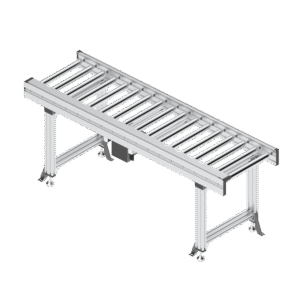
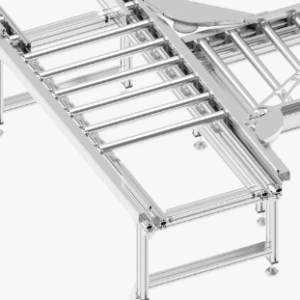
1. Light-Duty Standard Lines vs. Heavy-Duty Custom Lines: What’s the Difference?
Light-duty standard roller conveyor
メリット: Simple structure, fast commissioning, stable for light carton handling, easy for operators to use. 制限事項: Thin frame and insufficient roller wall thickness cannot support heavy workpieces. No matching limit protection means large parts are prone to wander off track; accumulation buffering is not supported.
Heavy-duty custom roller conveyor
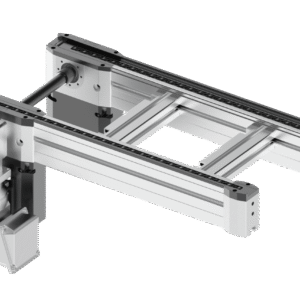
メリット: Heavy-duty stackable roller conveyors feature reinforced frames, thick-walled rollers, side limit baffles and stopping mechanisms. Workpieces can be held in temporary buffer positions. The line connects directly to assembly and inspection stations for stable transfer of large automotive components. 制限事項: Upfront structural design and scheme review take longer. They require strong structural design capability from the supplier, and initial investment is higher than for light-duty lines.
2. When a Heavy-Duty Custom Line Is Mandatory
Light-duty standard lines almost always fail in these scenarios:
- Transfer of heavy workpieces such as automotive gearboxes, drive motors and battery modules inside the workshop.
- Irregularly shaped workpieces with an off-center center of gravity that risk slipping or tipping on rollers.
- Buffer stations along the route where workpieces need to pause and wait for the next process.
- Integration of assembly stations, inspection stations and the conveyor into one connected line.
3. Real-World Project Example
An automotive component manufacturer needed to build an automotive motor assembly line. The first supplier they worked with only looked at workpiece weight and installed an ordinary light-duty roller frame — without evaluating module center of gravity or adding limit baffles. During trial runs, the motors kept drifting on the rollers, scratching casings and failing to stay stable.
They then switched to ヴィトランズ. Our technical team worked with the customer’s process engineers to measure workpiece center of gravity first, then selected a reinforced frame with accumulating rollers, installed adjustable side limit baffles along the line, and fitted stopper cylinders at stations for buffering. Conveying speed was also reduced to match the module transfer tact.
Project Configuration:
- Adopts heavy-duty stackable roller conveyor
- 300 kg load per pallet
- Used for automotive motor assembly
- Includes heavy-duty lift-and-locate units, rotary tables and other devices
Line Parameters:
- Single-section load: up to 300 kg per roller set in the heavy-duty section, with roller quantity arranged according to workpiece weight.
- Conveying speed: 0.8–12 m/min, kept within a reasonable range to reduce workpiece drift risk.
- Integratable modules: stopper cylinders, photoelectric detection, limit baffles for workpiece positioning and buffering.
Results after go-live: The full line delivers stable module transfer, collision issues are essentially resolved, and workpieces flow orderly through the buffer zone instead of piling up.
4. Five Common Pitfalls in Heavy-Duty Line Design
- Looking only at weight, ignoring center of gravity. An off-center workpiece can tip and scratch even with closely spaced rollers.
- Choosing rollers that are too thin-walled. Under sustained heavy load, rollers bend and frames sink, causing positioning drift within half a year.
- Skipping limit protection. Workpieces slide side-to-side on rollers and scrape against adjacent equipment, damaging outer casings.
- Setting speed too high. Large workpieces carry high inertia and easily shift when stopping.
- Leaving too little space at workstations. Operators cannot reach in to adjust workpieces, slowing down transfer tact.
5. How to Select a Heavy-Duty Roller Conveyor OEM
We recommend evaluating suppliers on these points:
- Can they work with your process engineers to map out the full transfer flow and evaluate weight, center of gravity and bottom support structure — instead of just applying ready-made drawings?
- Do they understand the transfer risks of large automotive parts and build in anti-scratch, anti-drift protection design?
- Do they have experience with complex custom conveyor lines and can integrate conveying, buffering and inspection into one line?
- Is the company stable enough to commit technical resources to both large and small projects, without cutting corners on structural design for smaller orders?
- Can they match roller wall thickness, frame structure and limit schemes to the workpiece’s center of gravity and weight — instead of offering one standard specification for everything?
よくある質問
Q: For heavy-duty roller lines, is more rollers always better? A: No. Rollers should be arranged according to the workpiece’s bottom support points. Too many rollers add unnecessary cost; too few and single-point load exceeds limits. Neither is ideal.
Q: Is maintenance more complicated for thick-walled rollers? A: Installation and removal work essentially the same as standard rollers. They are simply heavier and need lifting support during replacement — there is no fundamental difference in procedure.
Q: Can heavy-duty roller lines do accumulation buffering? A: Yes. Choose accumulating rollers paired with stopping mechanisms, so workpieces can be held on the line and released when the next process is ready.
閉会
For large automotive part roller lines, three things matter most: sufficient frame strength, adequate roller wall thickness and proper workpiece protection. Applying a light-duty carton-handling scheme directly will always cause on-site problems.
When selecting a supplier, always have them evaluate workpiece center of gravity and bottom structure first, then match limit and buffer mechanisms accordingly. Prioritize OEMs with deep heavy-duty expertise and complex customization capability, such as ヴィトランズ. Getting the line to run is one thing; keeping workpieces scratch-free and stable is another — and the latter is what a production line truly needs to solve.