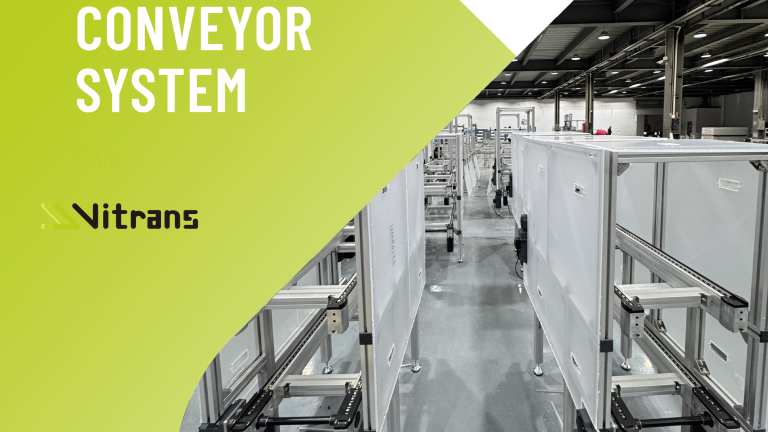
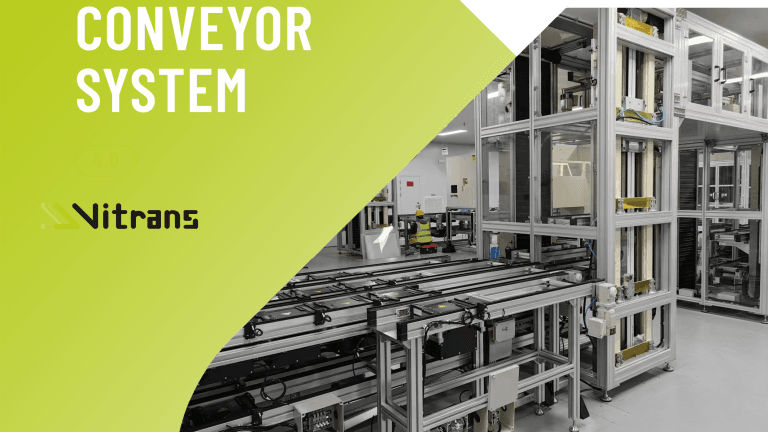
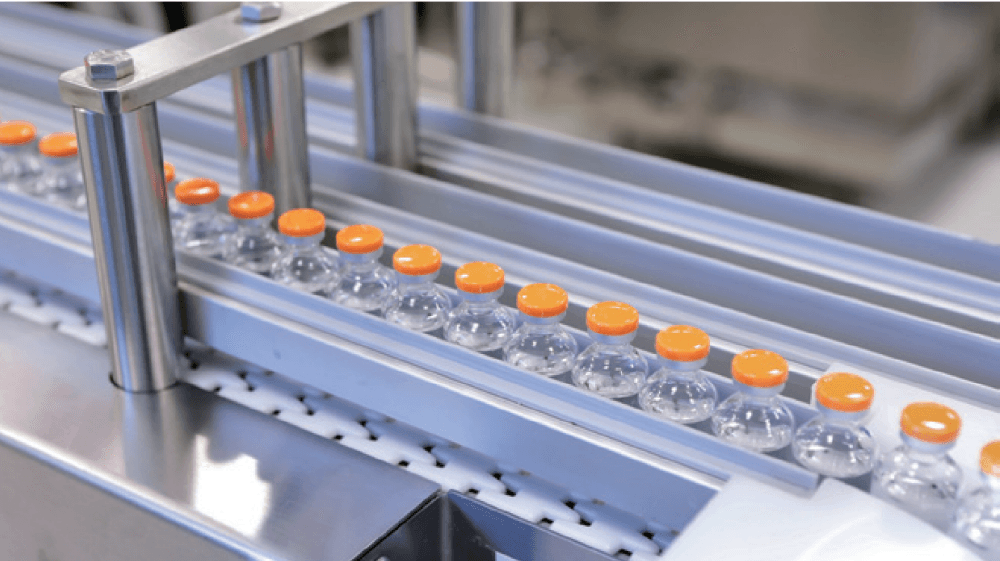
For standard production line planning, roller conveyors or chain lines usually work fine for straight sections, and traditional pallet lines fit most basic layouts. But when workshops have tight floor space, require winding routing, or need multi-layer vertical layouts, traditional conveying equipment often cannot fit. In these scenarios, flexible chain conveyor systems — with their flexible layout and easy assembly — have become a go-to choice for electronics manufacturing, food & beverage, personal care, pharmaceutical and photovoltaic industries.
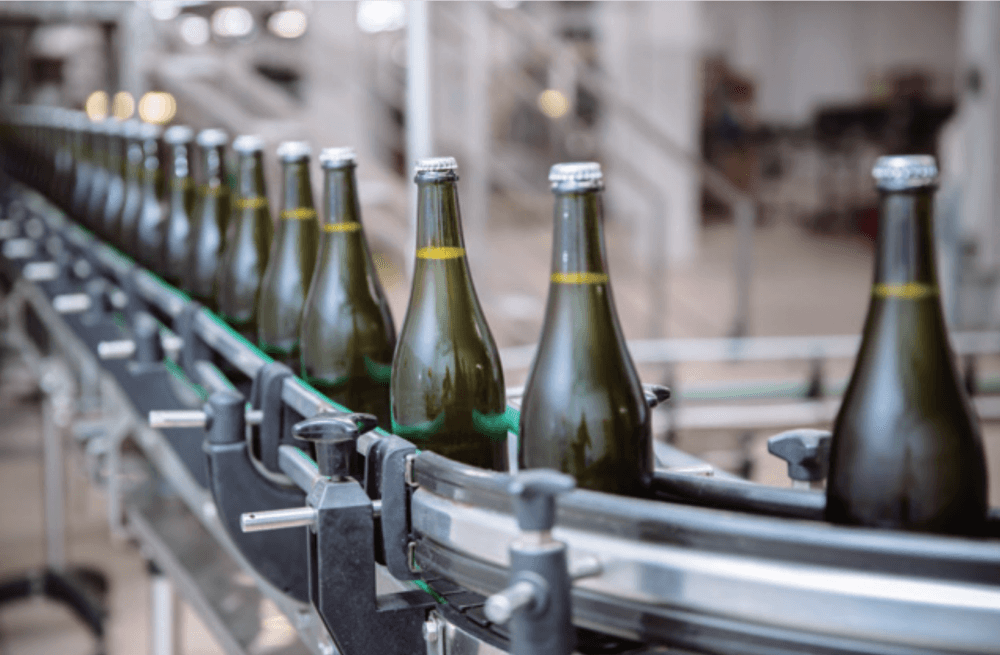
Recently, Vitrans Tự động hóa delivered a precision electronic component conveying system for an electronics manufacturer exactly for this type of scenario. The line has passed acceptance, running stably with low noise and meeting cleanroom standards, essentially resolving the customer’s long-standing conveying pain points. Below is a full breakdown of the project.
1. Original Workshop Challenges
The workshop was built years ago with a fixed building structure, leaving no room for traditional conveyor lines that require large-radius turns and long straight sections.
The old line had a large turning radius and inflexible layout, making upgrades difficult in the already cramped workshop and holding back space utilization. After years of operation, issues like material jamming, wear-generated dust and high noise gradually emerged — directly impacting the cleanliness and appearance consistency of electronic components, and limiting capacity improvement.
2. Customer Requirements
- Single component weight ≤ 0.8 kg
- Line dimensions must fit precisely into the narrow reserved space in the workshop
- Operating speed range: 12–30 m/min
- Smooth, stable operation throughout the full line
- Cleanliness compliant with cleanroom specifications
- Easy routine maintenance
In short, two non-negotiable requirements: accurate transfer of lightweight materials, and consistent cleanroom performance.
3. Vitrans Solution
After reviewing the requirements and site conditions, it was clear that electronic component conveying is far more than “moving parts from A to B.” The equipment must deliver long-term reliable performance across stability, efficiency, precision and wear resistance.
For this project, we deployed a fully customized flexible chain solution with targeted optimizations in several areas:
- Upgraded chain plate material. A new-generation engineering material improves wear and corrosion resistance by 50%, extending core component service life by over 40% compared with standard flexible chains. It reduces dust generation at the source — critical for electronic component workshops.
- Reinforced load-bearing structure. Key stress-bearing components are structurally optimized to improve overall impact strength of the chain plate assembly. This provides sufficient safety margin for high-density continuous conveying of electronic components, so chain plates resist deformation and fracture even under long full-load operation.
- Dedicated buffer zone design. The buffer zone is fitted with custom units, using precise in/out timing and low-resistance flow channel design. Components accumulate smoothly and release quickly, lowering power loss and reducing the risk of buffer jamming and product collision.
- Full-line modular construction. The modular layout eliminates the inflexibility of traditional conveyor lines at merging points. Later line adjustments and module swaps are easy — no full-scale teardown is needed to keep up with process iteration, giving the factory far more flexibility for capacity changes.
4. Practical Benefits of This Flexible Chain Solution in Electronics Scenarios
Optimized specifically for electronics manufacturing, the flexible chain plate conveying system delivers tangible on-site advantages:
- Space-saving routing. Flexible chain plates turn within the horizontal plane without separate turning modules. Under the same workshop area, space utilization is roughly 30% higher than with traditional lines.
- Product protection. Chain plate joints have almost no raised edges; products receive uniform force and travel without deviation or vibration. Components are far less likely to be scratched, reducing appearance damage right at the conveying stage.
- Easy integration. Standardized modular components connect smoothly with existing assembly lines, automation equipment or stainless steel conveying systems.
- Simple maintenance. The overall structure has no hard-to-clean dead spots, meeting high-cleanliness requirements for precision electronics. Daily cleaning is convenient and maintenance does not require long full-line shutdowns.
5. On-Site Performance Results
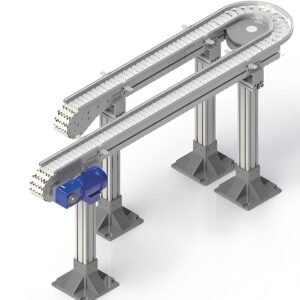
Three flexible chain conveyor lines were delivered for this project, mainly used in the precision electronic component assembly section. The system integrates guide mechanisms, positioning cylinders and sensing detection modules, realizing automatic handover from loading through conveying to assembly — stabilizing both production tact and product consistency.
After go-live, the customer summed up the performance in three words: stable, quiet, smooth. Unexpected downtime during continuous operation has dropped by 70% compared with the old pre-upgrade solution.


6. Why the Customer Chose Vitrans for This Project
Vitrans’ approach to conveyor lines has always been to design the best-fit solution for the customer’s actual production conditions, rather than pushing standard machines upfront.
Beyond this flexible chain plate line, Vitrans matches different conveying products to different scenarios — heavy-load pallet băng tải xích tích lũy, fast-diverting accumulating roller systems, and enclosed conveying solutions for high-cleanliness workshops — all with proven field deployments.
Different industries, materials, processes and tact times call for different solutions. We combine proven modular components to deliver systems that run reliably long-term and support future iteration.
Kết thúc
After this flexible chain project went live, the customer ordered two additional lines. After years in conveying equipment, our takeaway is this: there is no one-size-fits-all answer to on-site workshop problems. How to save space, protect products and simplify maintenance all require site visits and tact calculations before a solution can be finalized.
Moving forward, we will continue delivering similar conveying projects in automotive, new energy, medical electronics and high-end manufacturing — resolving every on-site challenge from design and manufacturing through delivery and after-sales support.