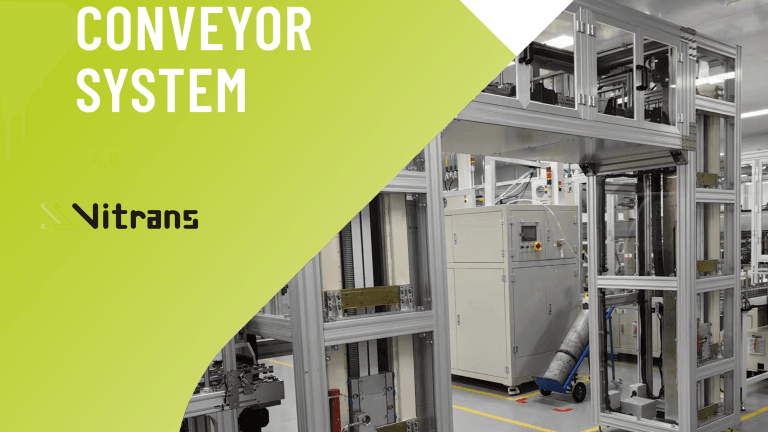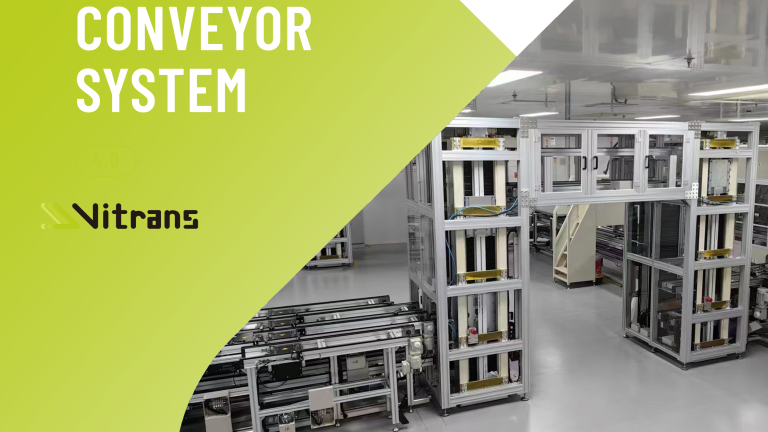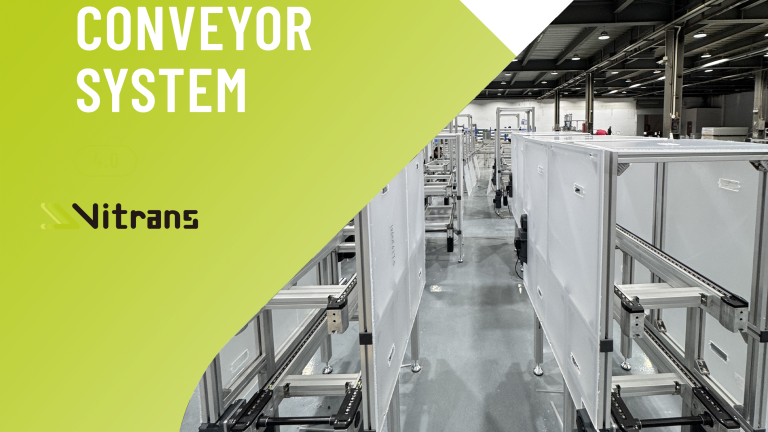











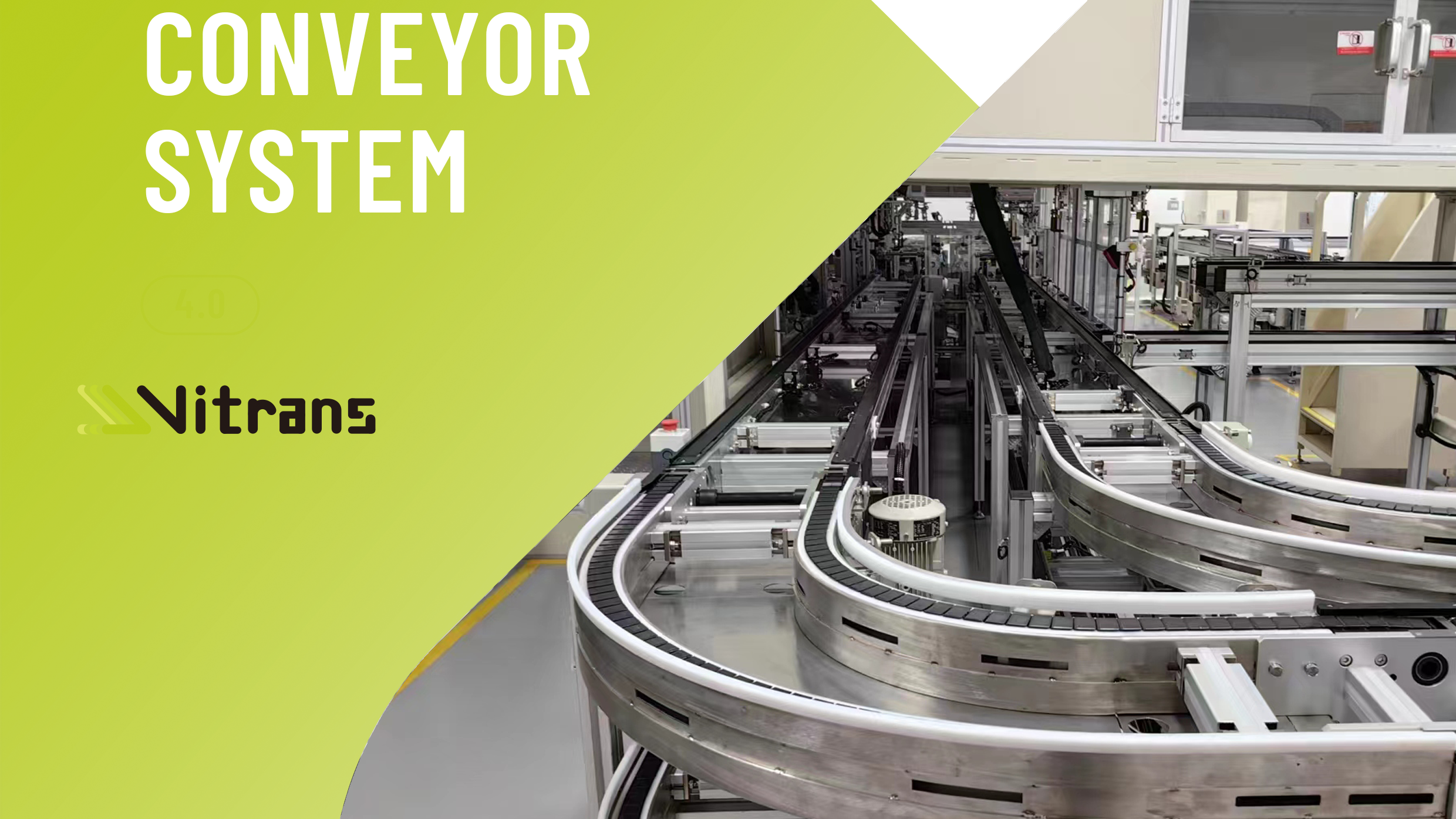
Restricted factory space and scattered process layout often require 90° right-angle turns or 180° U-shaped loop layouts. Many factories encounter persistent problems due to improper turning equipment selection: pallet deviation, scratches on precision workpieces, side tipping of heavy loads, oversized curve footprint occupying operating stations, lack of buffering to balance capacity mismatch between upstream and downstream stations, resulting in frequent jamming across the whole production line.
As an experienced R&D and manufacturer of conveying equipment, Vitrans Automation has completed multiple rounds of product iteration and independently developed two series of curve units to tackle typical pain points in short-distance turning. Based on years of project selection experience, this article elaborates application boundaries of different curve units in five sections: product overview, working principle, specification introduction, selection pitfalls and practical cases, helping manufacturers with customization demands make quick equipment matching.
1. Product Overview
Curve units, also known as bend modules, are essential standard directional components for automated pallet conveying lines. They change the travel direction of the whole line without manual intervention, ensuring pallets with workpieces travel around bends steadily without tilting or overturning.
Vitrans Automation offers two distinct curve unit product lines for different working conditions, covering most pallet conveying applications on the market:
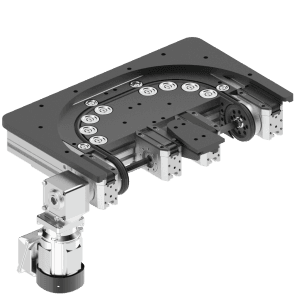
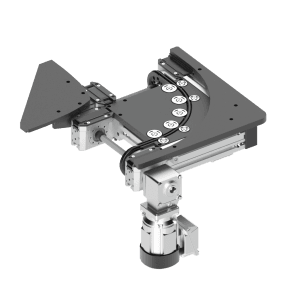
- Round Belt Curve Unit (90° / 180° round belt curve) Designed for light-duty compact applications. Driven by anti-static round belts, the unit features an ultra-compact frame, low running noise and superior protection for precision parts. Ideal for space-constrained clean workshops.
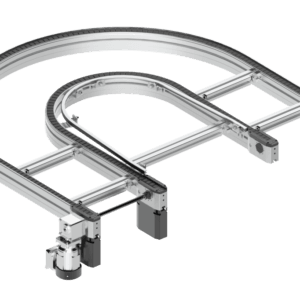
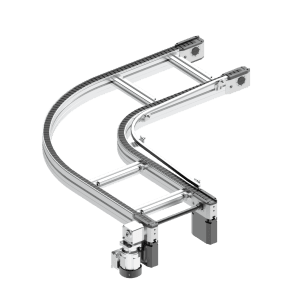
- CV Slat Chain Curve Unit (CV/90, CV/180) Developed for medium & heavy-duty transportation. Supported by plastic flat-top slat chains with higher load capacity. It supports pallet accumulation and accommodates large-size pallets as well as workshops with minor oil contamination. Custom widening and lengthening are available upon request.
The two product lines feature complementary positioning. Hybrid production lines often adopt combined configurations to satisfy both protection requirements for lightweight components and load demands for heavy materials.
2. Working Principle
Round Belt Curve Unit
A loop of anti-static rubber round belts is installed inside the unit, driven by a three-phase geared motor for one-way operation. After pallets are placed on the belt surface, friction drives pallets to travel along the curved track. The arc track restricts pallet movement trajectory; pallets maintain consistent orientation while the conveying line changes direction.
The flexible belt provides built-in cushioning, effectively preventing collision and scratching of vulnerable products such as circuit boards and plastic components.
CV Slat Chain Curve Unit
Plastic flat-top slat chains serve as the load-bearing medium. The motor drives chains circulating along curved guide rails, and wide rigid slats support pallets to achieve 90° right-angle turning or 180° U-shaped turning.
When equipped with standard WA2 pallets, pallet accumulation inside the curve is supported to ease line congestion caused by inconsistent tact time between adjacent processes. Lubrication ports are reserved on the unit, improving durability in environments with cutting fluid or machine oil. Extended straight inlet & outlet sections can be configured to adapt to extra-long pallets.
3. Parameter Comparison of Two Curve Units
表格
| Comparison Item | Round Belt Curve | CV Slat Chain Curve (CV/90, CV/180) |
|---|---|---|
| Teherbírás | Max. 20kg, for lightweight small parts | CV/90 up to 90kg; CV/180 up to 60kg, compatible with light & heavy materials |
| Pallet Accumulation | Not supported; pallets pass through one by one | Accumulation available for WA2 pallets to balance tact difference |
| Footprint | Compact frame, saves station space | Larger overall dimension; sufficient installation space required |
| Suitable Environment | High cleanliness cleanroom, oil-free operation | Machining workshops with small amounts of cutting fluid and lubricant |
| Operating Noise | Flexible belt drive, ultra-low noise | Chain meshing transmission, relatively higher noise |
| Daily Maintenance | Simple belt replacement, minimum regular maintenance | Periodic chain lubrication required; automatic lubrication accessories optional |
| Applicable Pallet Size | Small pallets: 160–400mm | Full range: 160–1200mm; custom widening & lengthening supported |
| Material Protection | Soft contact, minimizes workpiece scratching | Rigid slats with high wear resistance; not recommended for ultra-thin precision components |
4. Guidelines for Equipment Selection
Instead of memorizing parameters rigidly, make comprehensive judgment based on on-site load, space, cleanliness requirements and production tact. Below are practical selection logics and common pitfalls.
Basic Selection Criteria
① Load Weight
Choose round belt curves for total pallet weight within 20kg, such as battery cells and miniature electronic components. Select slat chain curves when single pallet load exceeds 20kg (auto parts, heavy battery modules, metal housings). Pick CV/90 for heavy-duty right-angle turning.
② Demand for Pallet Accumulation
If large tact fluctuation between upstream and downstream stations frequently causes material blocking and pallet queuing is required, select CV slat chain curves. If production tact is stable without accumulation demand and stations are narrow, round belt curves are the preferred solution.
③ Workshop Environment
Round belt curves are recommended for Class 3C and lithium battery clean assembly workshops with strict anti-static and cleanliness standards. Oil-resistant CV slat chain curves perform better in stamping and machining workshops with cutting fluid.
④ Available Factory Space
Round belt curves with compact structure fit crowded stations and narrow conveying channels. Slat chain curves deliver higher stability for spacious workshops and long-loop production lines.
⑤ Precision Level of Workpieces
Circuit boards, display panels and precision plastic parts prone to scratches should adopt round belt curves with soft contact. CV slat chain curves work perfectly for wear-resistant workpieces including motor housings and metal casings.
Selection Pitfall Reminders
- Both round belt curves and CV slat chain curves support one-way conveying only. Not suitable for lines requiring bidirectional pallet transfer.
- Avoid long-term overloading on round belt curves; overload leads to belt slipping and deformation. Oil-contaminated environments significantly shorten belt service life.
- Pallet accumulation inside CV curves is only valid for WA2 pallets; WE pallets are likely to jam if staying within the curve section.
- CV slat chain curves are not recommended for high-standard clean laboratories; gaps between chains easily gather dust and increase cleaning workload.
- Distinguish curve units from lift & rotate units: curve units change the overall line route while keeping pallet orientation unchanged; lift & rotate units spin pallets on the spot to adjust workpiece angle. The two cannot replace each other.
5. Practical Application Cases
Case 1: 3C Lithium Battery Compact Assembly Line – 90° Round Belt Curve
A consumer electronics manufacturer operates cell assembly in Class 10,000 clean workshop with compact station layout. Pallet dimension: 240mm; total weight of cell plus pallet: 12kg. Straight conveying layout cannot be implemented due to space constraints, requiring 90° turning at operating stations.
After adopting the 90° round belt curve unit, the compact frame avoids occupying operator workspace. Low-noise belt transmission prevents scratches on cell shells, and multi-speed adjustment matches assembly tact. Maintenance-free design reduces daily workshop workload. The whole conveying line has run stably for two years without failures.
Case 2: Automotive Motor Component Loop Line – CV/180 Slat Chain Curve
An auto parts factory builds a U-shaped circulating line for motor housing machining. Maximum pallet size reaches 800mm; single pallet workpiece weight up to 35kg. Capacity mismatch exists between stamping and machining processes, requiring intermediate pallet accumulation, and small amounts of cutting oil are generated on site.
CV/180 slat chain curves are deployed to meet load requirements. WA2 pallets can be accumulated inside curves to balance tact fluctuation. Oil-resistant chains ensure long service life, and extended inlet/outlet sections adapt to large-size pallets, completely resolving historical issues of heavy workpiece jamming during U-shaped turning.
Case 3: Mixed Assembly Line for Small Household Appliances – Combined Round Belt Curve + CV Curve
A home appliance manufacturer runs a hybrid production line. The front section transports delicate plastic components requiring high cleanliness; the rear section transfers metal housings in an oil-contaminated area.
The layout adopts 90° round belt curves for narrow cleanroom corners and CV/90 slat chain curves for heavy-duty circulating sections. Both units can seamlessly connect standard straight conveyors. The combination protects precision small parts from scratching while undertaking heavy metal workpiece transportation. One single line adapts to two different working scenarios and lowers overall equipment procurement cost.
About Vitrans Automation
As a professional manufacturer of pallet conveying systems, Vitrans provides diversified conveying solutions for various application scenarios. With reliable product performance, strict quality control, strong customization capability and complete after-sales service, we deliver stable and efficient pallet transportation systems. Customers can determine the optimal solution according to production efficiency planning and site layout requirements.