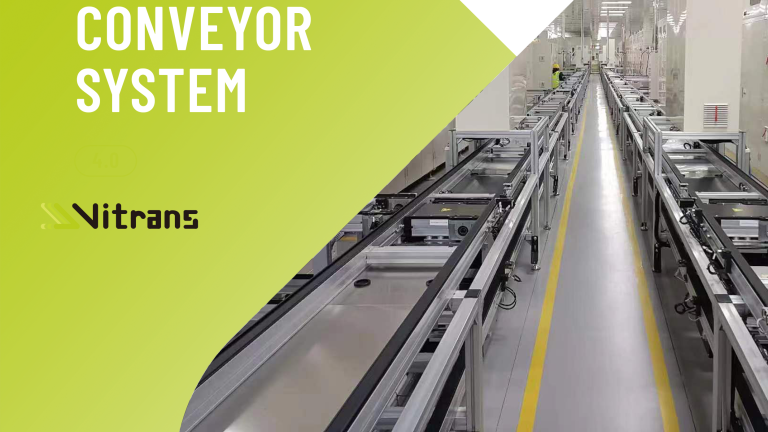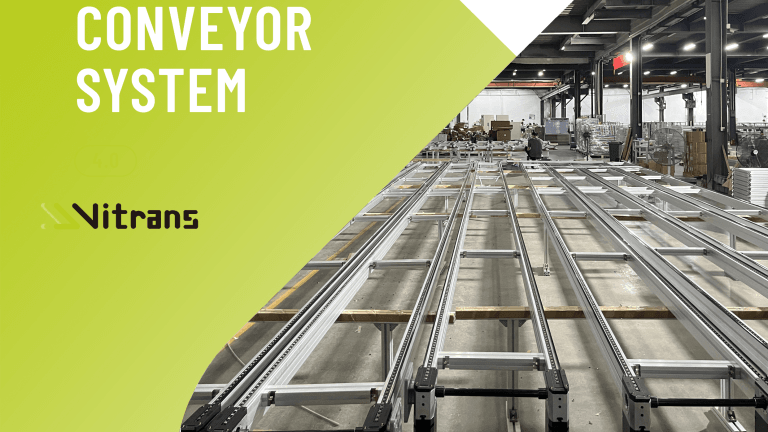










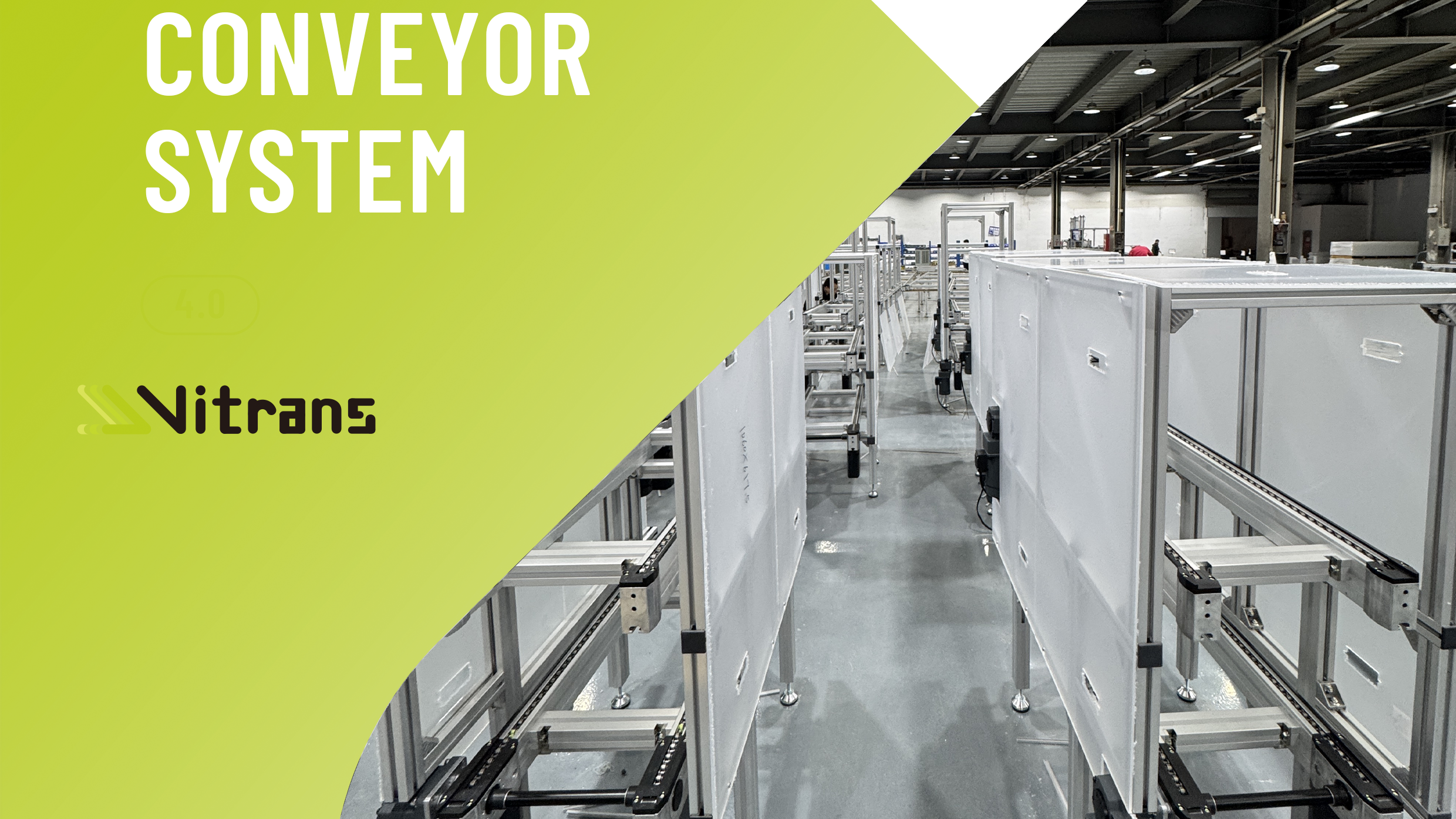
For production line planners in industrial automation, the widespread adoption of pallet conveyor system lines stems from flexible configuration, stable operation, easy maintenance and wide adaptability across diverse working conditions. When it comes to vertical transfer segments, Vitrans Automation — a conveyor equipment manufacturer with 10 years of project experience and in-house R&D & production capabilities — has developed the LP/C double-stroke lifter, which has become a popular selection for double-layer production lines. Many customers wonder why it stands out among various lifting devices. Its core advantage lies in an ingenious mechanical design that delivers excellent cost performance and compact footprint for pneumatic lifting applications. This article elaborates on the features and applicable production scenarios of this lifting equipment.
1. Introduction to LP/C Double-Stroke Lifter
The LP/C double-stroke lifter is a pneumatic reciprocating lifting unit within Vitrans’ pallet conveyor system portfolio. It is purpose-built for vertical pallet transfer on double-layer pallet assembly lines and widely deployed in old workshop retrofits and double-layer circulation production lines.
What does “double-stroke” mean? For conventional cylinder-driven lifting equipment, the platform travels the exact same distance as the cylinder stroke at a 1:1 ratio. In contrast, the double-stroke lifter incorporates an internal chain-and-sprocket stroke-amplifying mechanism. The cylinder only needs to travel half the stroke length to move the platform through the full lifting height. In short, a short cylinder achieves the lifting range of a long cylinder, resulting in a much more compact machine footprint.
Key Specifications
- Max single pallet load: 50 kg
- Max lifting speed: 300 mm/s
- Delivered as pre-assembled modular unit
- Built-in timing belt conveyor section, through-beam photoelectric sensors and transparent safety guard as standard
- Compatible with standard WA2 & WE2 pallets, pallet width coverage: 160~640 mm
- Non-standard customization available for special dimensions or synchronous multi-pallet lifting
2. Working Principle: Stroke Amplification via Mechanical Structure
The operating principle of the double-stroke lifter is straightforward. Its core is a cylinder paired with a double-stroke chain-sprocket mechanism to mechanically amplify travel distance.
When the cylinder extends and retracts, it drives the movable sprocket. One end of the chain is fixed to the machine frame. As the cylinder moves, the pallet-carrying platform travels twice the cylinder stroke. When the cylinder extends halfway, the platform reaches its full lifting height — this is the origin of the “double-stroke” name.
Full operation workflow:
- Pallet enters the lifter from the main external conveyor and stops at the loading station.
- The cylinder actuates, driving the platform via the double-stroke mechanism to the target floor height.
- The built-in conveyor starts and transfers the pallet onto the upper-level main line.
- The cylinder resets and waits for the next incoming pallet.
Safety is fully considered. Through-beam photoelectric sensors are installed at floor docking positions. If pallet jamming or position deviation is detected, cylinder movement locks immediately to prevent collision damage, ensuring reliable long-duration continuous production.
3. Compatible Conveyor Line Types
Vitrans’ full range of standard conveyor modules can interface with this lifter. The machine is equipped with BC2 synchronous belt conveyor line by default. You can select external conveyor types according to site conditions:
- For cleanroom short-distance conveying: BC2 timing belt or FC2 flat belt, paired with WA2 light-duty pallets.
- For heavier workpieces with acceptable minor oil contamination: AC2 roller chain with higher load capacity, matched with WE2 heavy-duty pallets.
- For ultra-high cleanliness requirements such as medical devices and precision component assembly: PC2 top chain reduces dust and oil contamination.
Selection Tip: Match pallet type with conveying medium: WA2 for belt conveyors and WE2 for chain conveyors, to extend the service life of wear strips. The built-in conveyor segment can also be modified for special requirements.
4. Core Advantages: Compact Layout & High Cost-Efficiency
The standout strengths of this equipment revolve around compact size, ease of operation and reliable performance.
- Compact footprint to save floor space: For the same lifting height, the cylinder stroke is half that of conventional models, reducing overall machine height and depth. In workshops with limited ceiling height and densely arranged equipment, conventional lifters often cannot fit, while the LP/C can be installed without major rework of the existing line layout.
- Cost-friendly & low maintenance barrier: No complex servo motor or encoder assemblies. Cylinders, flow control valves and magnetic switches are standard off-the-shelf components, affordable and easy to source. Ordinary maintenance technicians can complete routine servicing.
- Superior load capacity among pneumatic lifters: Typical rodless cylinder lifters only support up to 30 kg, while the LP/C reaches 50 kg. It can handle pallets fitted with heavier tooling fixtures for wider application coverage.
- Pneumatic buffer for lifting motion: Soft start and stop reduce impact, lowering the risk of collision damage for precision workpieces. Standard modular interfaces allow direct connection with curve units, lift-and-transfer modules and stopper units, shortening assembly and commissioning cycles for new projects.
5. Model Comparison & Applicable Scenarios
How do you pick between different lifter models in the same series? This comparison table for quick reference:
表
| モデル | 駆動方式 | 最大負荷 | Max Lifting Speed | Compatible Lines | Core Features |
|---|---|---|---|---|---|
| LP/C Double-Stroke Lifter | Cylinder + double-stroke chain | 50 kg | 300 mm/s | Double-layer lines only | Highest load capacity & most compact footprint among pneumatic models |
| LP/P Rodless Cylinder Lifter | Rodless cylinder | 30 kg | 300 mm/s | Double-layer lines only | Simple structure, universal spare parts |
| LP/B Timing Belt Lifter | Servo motor + timing belt | 30 kg | 500 mm/s | Double / multi-layer lines | Fast speed, supports multi-story layouts |
| LP/S ボールねじリフター | Servo motor + ball screw | 30 kg | 500 mm/s | Double / multi-layer lines | High positioning accuracy, minimal vibration |
LP/C is most widely adopted in these real-world scenarios:
- Double-layer circulation assembly lines, including lithium battery cell, 3C electronics and automotive small component pallet vertical circulation.
- Retrofit of old production lines for double-layer expansion with low modification costs and minimal disruption.
- Clean assembly workshops and height diversion transfer for home appliance components.
However, the double-stroke lifter is not universal. It cannot support three or more multi-layer lines; servo-driven models are required instead. Electric solutions are also recommended if stable compressed air supply is unavailable on-site.
Vitrans Automationについて
With more than ten years of experience in R&D, manufacturing and custom line integration of conveyor modules, Vitrans Automation focuses deeply on automated conveying equipment. We cover the full value chain from production to sales. Our solution design balances performance and cost-effectiveness. If you are evaluating vertical transfer solutions for double-layer production lines and interested in the LP/C double-stroke lifter, Vitrans can develop customized solutions according to your on-site working conditions to simplify your automation upgrade.