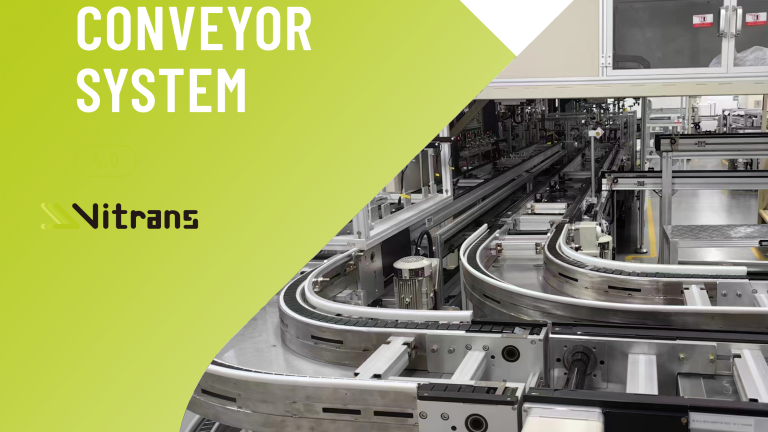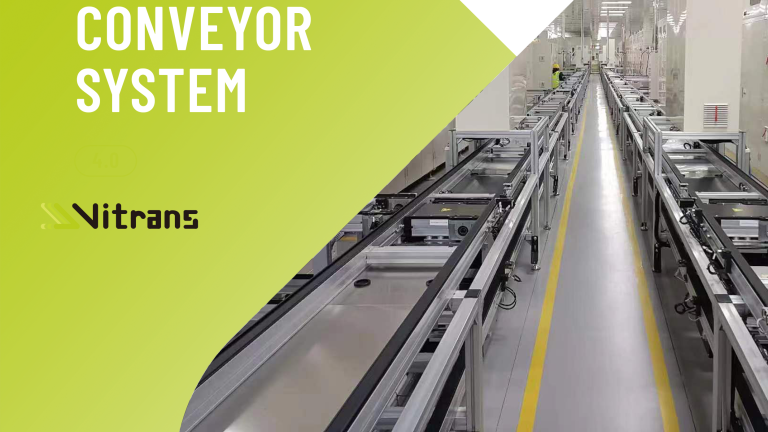









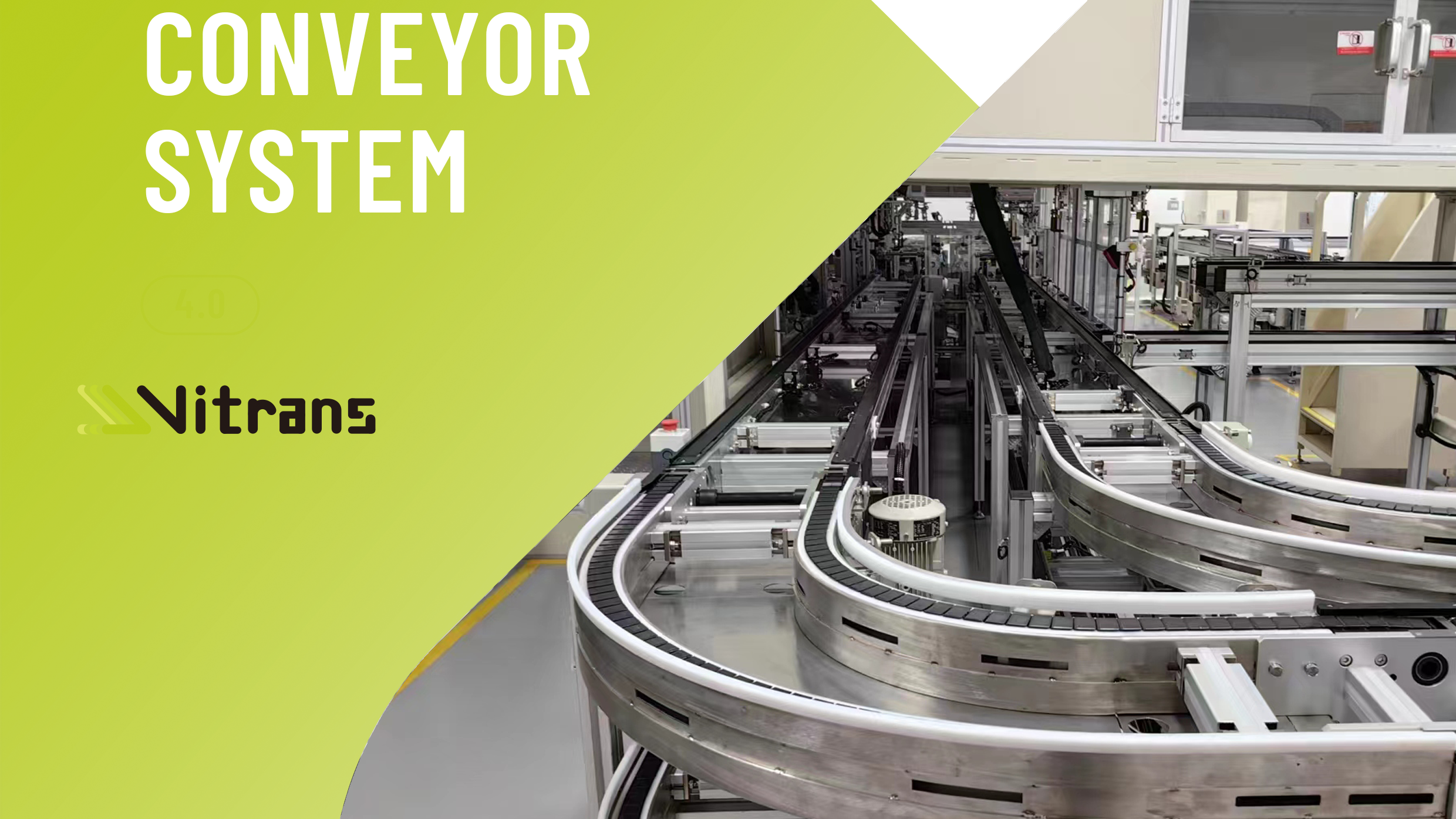
Belt conveyors are core efficiency-boosting equipment for production lines across 3C electronics, food processing, precision machinery and other industries. However, space limits, load thresholds and positioning precision standards vary drastically between different production scenarios. When it comes to low-output, short-distance assembly lines, many engineers struggle to select the most compatible mini conveyor model.
Below we break down core parameters, strengths and matching industrial applications for six mainstream mini belt conveyor series to simplify your equipment selection.
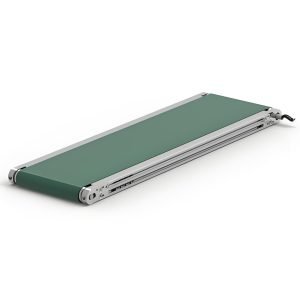
1. Standard Wide Belt General Conveyor
Supports forward & reverse conveying; built-in guide strips and curved rollers prevent belt deviation, with tight fit between belt and conveying surface.
- Core Specs: Single-groove aluminum profile, load capacity 0–200kg
- Key Advantages: Stable operation within ultra-narrow layouts; anti-offset structure reduces component abrasion and positioning errors for tiny workpieces
- Ideal Scenarios: Short-distance transport of micro electronic components in 3C manufacturing; handling miniature precision instrument parts
按类别列出产品
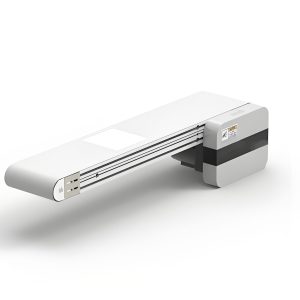
2. Wide Belt Conveyor with Built-In Motor
Bi-directional transmission; dual anti-deviation structure combining guide strips and curved rollers, delivering superior flatness precision.
- Core Specs: Double-groove aluminum profile, load capacity 0–100kg
- Key Advantages: Integrated internal motor saves floor space for complex line integration; all-in-one mechanical & drive design minimizes external interference for steady operation
- Ideal Scenarios: Space-restricted assembly lines for smartphones & tablets; compact, clean conveying of small medical consumables
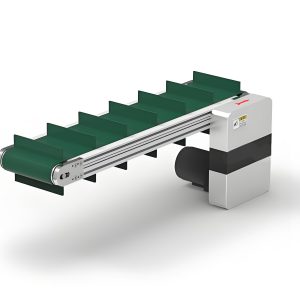
3. Custom Cleated Wide Belt Conveyor
Forward & reverse operation; customizable baffles/separators with adjustable spacing installed on the belt, optimized for medium-light loads.
- Core Specs: Triple-groove aluminum profile, load capacity 0–20kg
- Key Advantages: Modular baffles separate different materials and support stacked processing workflows to fit diversified production demands
- Ideal Scenarios: Product sorting in food processing; specification classification for daily chemical goods
4. Wide Belt Vision Backlight Inspection Conveyor
Single-direction conveying; curved rollers eliminate belt wandering, paired with light-transmissive belts and bottom parallel light sources, engineered exclusively for visual inspection.
- Core Specs: Triple-groove aluminum profile, load capacity 0–10kg
- Key Advantages: Matched light-transmitting belt and light source enhance accuracy for appearance, dimensional and defect inspection; ultra-flat conveying surface guarantees consistent detection results
- Ideal Scenarios: Appearance inspection of chips, capacitors and other electronic components; surface flaw & dimensional precision testing for precision mechanical parts
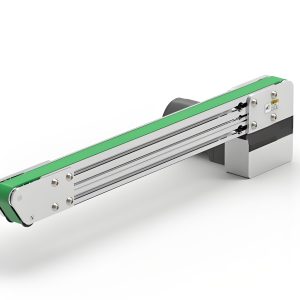
5. Single-Lane Narrow Belt Conveyor
Bi-directional transfer; edge guides maintain alignment under light loads, fabric-lined timing belts cut operating noise, compatible with precise positioning.
- Core Specs: Double-groove aluminum profile, load capacity 0–5kg
- Key Advantages: Ultra-precise positioning for micro-sized goods; low-noise operation suitable for noise-sensitive clean production workshops
- Ideal Scenarios: Transport of tiny clock components; stable handling of delicate jewelry parts
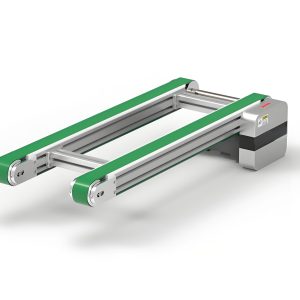
6. Dual-Lane Narrow Belt Conveyor
Forward & reverse conveying; dual narrow timing belt layout lifts line throughput while retaining high-precision positioning capability.
- Core Specs: Double-groove aluminum profile, load capacity 0–10kg
- Key Advantages: Dual-track design boosts unit-hour conveying volume, supports high-accuracy transfer of fixture pallets
- Ideal Scenarios: Pallet transport during electronic component insertion processes; small fixture pallet transfer for automotive component assembly