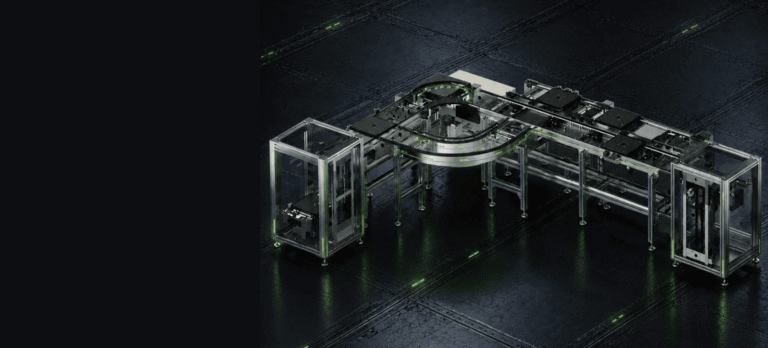











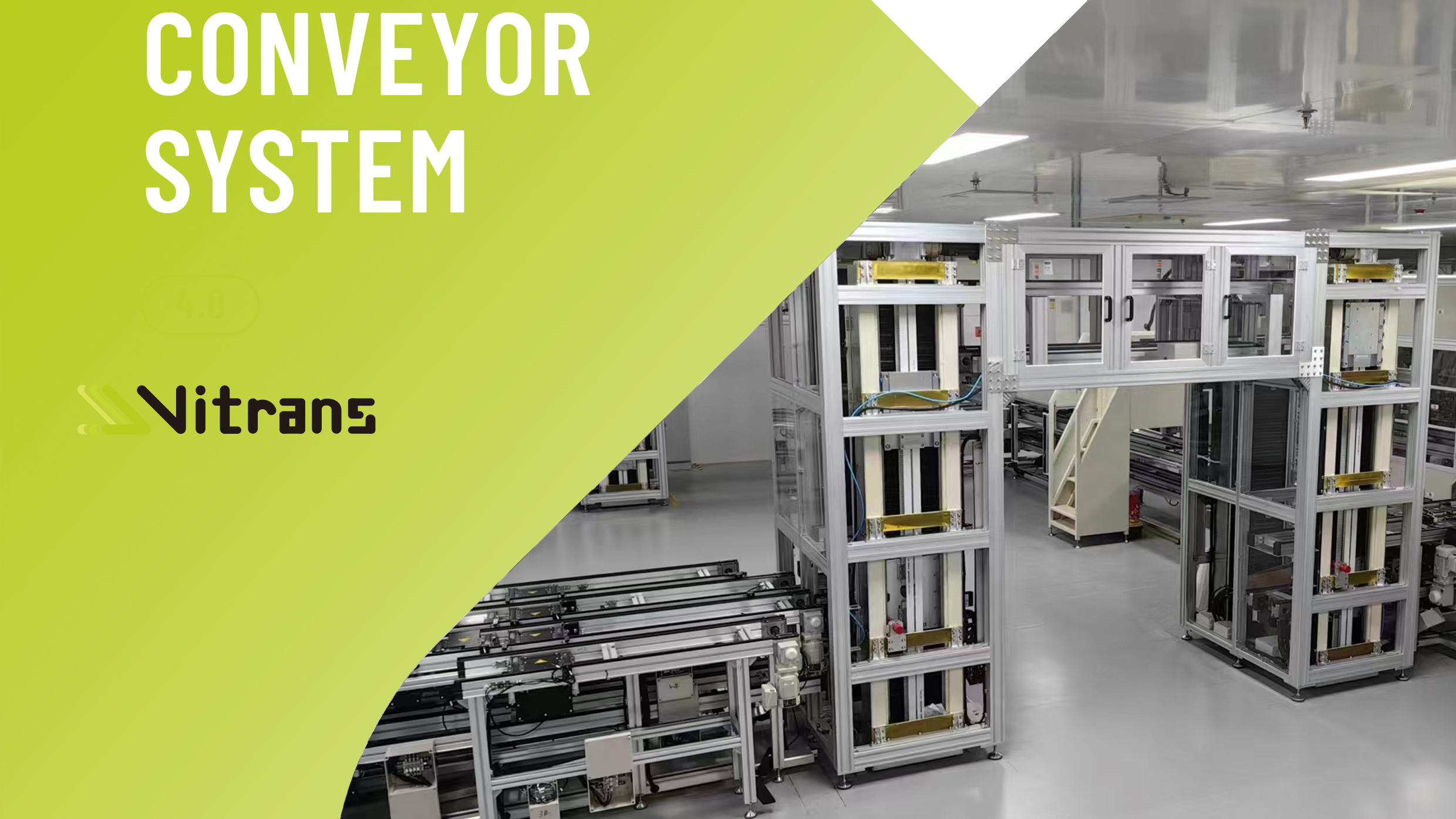
In automated turn‑key production‑line planning, pallet return and transfer are always critical challenges. Especially for manufacturing workshops with limited floor space, conventional horizontal return systems require extra parallel return conveyors. These not only occupy substantial floor area but also easily cause path crossover and tact‑time bottlenecks, which drag down overall line efficiency.
Understanding the Timing‑Belt Lifter Technology
The Importance of the Timing‑Belt Lifter in Modern Manufacturing
Targeting this widespread pain point, Vitrans Automation has developed the LP/B Timing‑Belt Pallet Lifter, engineered for vertical pallet return within modular pallet‑handling conveyor systems. Replacing horizontal bypass routing with vertical lifting, it delivers stable conveying and precise height positioning. It has become a proven standard solution for multi‑layer production layouts across 3C electronics, new‑energy, and automotive‑component industries.
01 Core Logic: Why Timing‑Belt Lifting Delivers Superior Stability
The Timing‑Belt Pallet Lifter has emerged as a critical component in enhancing automated production lines, offering unique solutions for pallet handling.
Understanding the Benefits of the Timing‑Belt Lifter
Working Principle: Positive‑drive transmission for controlled lifting
People may wonder why select timing‑belt pallet lifter for vertical pallet transfer. The key lies in transmission mechanism. Driven by servo motors and timing‑belt pulleys, power is transmitted via tooth‑meshing engagement. Unlike standard belts, timing belts avoid slipping; compared with chain drives, they eliminate oil contamination and excessive noise. Guiding structures constrain movement to guarantee stable lifting throughout the full stroke.
The lifting platform integrates an on‑board timing‑belt pallet lifter conveyor, enabling automatic pallet in‑feed and out‑feed without additional docking mechanisms. Workflow runs seamlessly: pallets flow from main line onto the platform, the lifter elevates pallets to target elevation, and the integrated conveyor discharges pallets onto corresponding floor‑level line segments for gap‑free hand‑over.
Multiple safety features are embedded. Slot‑type photoelectric sensors calibrate home position to ensure consistent datum for every lifting cycle. Opposed‑mode photoelectric sensors are installed at inter‑layer interfaces; they trigger immediate emergency stop once pallet jamming is detected to prevent equipment collision. Proximity switches monitor guarding‑component status for enhanced operational safety.
The machine frame is assembled from industrial aluminum profiles, balancing high rigidity and moderate self‑weight. Adjustable leveling feet compensate for uneven workshop floors. Compared with welded frames, aluminum‑profile construction simplifies spare‑part replacement and equipment relocation, greatly reducing production downtime.
Key Performance Highlights
① Maximum lifting speed up to 500 mm/s, matching high‑tact production lines.
With the Timing‑Belt Lifter, users can expect reduced maintenance needs due to its lubrication-free design.
② Low‑noise operation, suitable for clean‑room environments.
③ Lubrication‑free timing‑belt drive fundamentally avoids workpiece oil contamination; routine maintenance only requires periodic tension inspection, lowering overall service costs.
④ Positioning accuracy reaches ±0.05 mm with calibration, minimizing jamming or misalignment during pallet docking.
02 Three High‑ROI Application Scenarios
The LP/B timing‑belt lifter features broad compatibility, delivering the most value in three typical project scenarios:
- Pallet return for double‑deck assembly lines (most common) After assembly and inspection on upper‑level main lines, empty pallets descend via the lifter to lower‑level return conveyors and circulate back to loading stations. No lengthy parallel return tracks are required, saving over 30 % of workshop floor space.
- Height transition between misaligned‑height process stations Where connected machinery has different working heights, e.g., high outlet of injection‑molding machines paired with low assembly workstations, the lifter bridges height gaps and eliminates manual handling to realize full automatic material flow.
- Carrier circulation for multi‑tier aging lines & vertical buffer storage Cooperating with multi‑layer aging racks or vertical buffer warehouses, loaded carriers are transported to high‑level stations and return to loading zones after process completion. It makes full use of vertical space instead of deploying large‑scale ground‑based buffer conveyors.
03 Advantages vs. Conventional Horizontal Return Layouts
Benefits are reflected in practical on‑site operation details:
- Space‑saving footprint Horizontal return loops occupy considerable floor space with dedicated parallel conveyors. The vertical lifter merely takes one workstation width, ideal for small‑plant capacity expansion and legacy‑workshop retrofits.
- High tact‑time flexibility Lifting and conveying adopt independent drive units: servo motor for vertical motion, stepper motor for on‑board conveying. Speed parameters can be tuned separately to satisfy diverse line tact requirements. Modes including standby docking, continuous circulation and fixed‑position halt are all supported.
- Simplified installation & integration Modular aluminum‑profile frames facilitate relocation and dimensional modification with controlled costs. Width and pitch of built‑in conveyors can be customized according to customer pallet dimensions. It seamlessly interfaces with Vitrans belt conveyors, roller‑chain conveyors and double‑speed chain systems, enabling fast integration into existing production‑line retrofits.
- Low failure rate for long‑term operation Mechanical structure is optimized for repeated cyclic duty cycles. Quick‑access timing‑belt tension adjustment simplifies routine maintenance and cuts downtime.
04 Sourcing Guide: Clarify Three Key Questions Before Selection
① Dimension & payload
Q: What are pallet length & width? Total weight including workpiece and fixture?
A: Standard model fits pallets from 160 mm to 640 mm, rated payload 30 kg, covering most light‑duty conveying applications.
② Layer height & tact‑time requirement
Q: Heights of upper‑level and lower‑level conveyors? Required transfer cycle time for production line?
A: Standard version minimum lower‑level height ≥ 350 mm, maximum upper‑level height ≤ 1500 mm. Lifting speed is adjustable on demand. Pre‑calculate tact‑time for accurate matching.
In automated turn‑key production‑line planning, pallet return and transfer are always critical challenges. Especially for manufacturing workshops with limited floor space, conventional horizontal return systems require extra parallel return conveyors. These not only occupy substantial floor area but also easily cause path crossover and tact‑time bottlenecks, which drag down overall line efficiency.
Targeting this widespread pain point, Vitrans Automation has developed the LP/B Timing‑Belt Lifter, engineered for vertical pallet return within modular pallet‑handling conveyor systems. Replacing horizontal bypass routing with vertical lifting, it delivers stable conveying and precise height positioning. It has become a proven standard solution for multi‑layer production layouts across 3C electronics, new‑energy, and automotive‑component industries.
01 Core Logic: Why Timing‑Belt Lifting Delivers Superior Stability
Working Principle: Positive‑drive transmission for controlled lifting
People may wonder why select timing‑belt lifting for vertical pallet transfer. The key lies in transmission mechanism. Driven by servo motors and timing‑belt pulleys, power is transmitted via tooth‑meshing engagement. Unlike standard belts, timing belts avoid slipping; compared with chain drives, they eliminate oil contamination and excessive noise. Guiding structures constrain movement to guarantee stable lifting throughout the full stroke.
The lifting platform integrates an on‑board timing‑belt conveyor, enabling automatic pallet in‑feed and out‑feed without additional docking mechanisms. Workflow runs seamlessly: pallets flow from main line onto the platform, the lifter elevates pallets to target elevation, and the integrated conveyor discharges pallets onto corresponding floor‑level line segments for gap‑free hand‑over.
Multiple safety features are embedded. Slot‑type photoelectric sensors calibrate home position to ensure consistent datum for every lifting cycle. Opposed‑mode photoelectric sensors are installed at inter‑layer interfaces; they trigger immediate emergency stop once pallet jamming is detected to prevent equipment collision. Proximity switches monitor guarding‑component status for enhanced operational safety.
The machine frame is assembled from industrial aluminum profiles, balancing high rigidity and moderate self‑weight. Adjustable leveling feet compensate for uneven workshop floors. Compared with welded frames, aluminum‑profile construction simplifies spare‑part replacement and equipment relocation, greatly reducing production downtime.
Key Performance Highlights
① Maximum lifting speed up to 500 mm/s, matching high‑tact production lines.
② Low‑noise operation, suitable for clean‑room environments.
③ Lubrication‑free timing‑belt drive fundamentally avoids workpiece oil contamination; routine maintenance only requires periodic tension inspection, lowering overall service costs.
④ Positioning accuracy reaches ±0.05 mm with calibration, minimizing jamming or misalignment during pallet docking.
02 Three High‑ROI Application Scenarios
The LP/B timing‑belt lifter features broad compatibility, delivering the most value in three typical project scenarios:
- Pallet return for double‑deck assembly lines (most common) After assembly and inspection on upper‑level main lines, empty pallets descend via the lifter to lower‑level return conveyors and circulate back to loading stations. No lengthy parallel return tracks are required, saving over 30 % of workshop floor space.
- Height transition between misaligned‑height process stations Where connected machinery has different working heights, e.g., high outlet of injection‑molding machines paired with low assembly workstations, the lifter bridges height gaps and eliminates manual handling to realize full automatic material flow.
- Carrier circulation for multi‑tier aging lines & vertical buffer storage Cooperating with multi‑layer aging racks or vertical buffer warehouses, loaded carriers are transported to high‑level stations and return to loading zones after process completion. It makes full use of vertical space instead of deploying large‑scale ground‑based buffer conveyors.
03 Advantages vs. Conventional Horizontal Return Layouts
Benefits are reflected in practical on‑site operation details:
- Space‑saving footprint Horizontal return loops occupy considerable floor space with dedicated parallel conveyors. The vertical lifter merely takes one workstation width, ideal for small‑plant capacity expansion and legacy‑workshop retrofits.
- High tact‑time flexibility Lifting and conveying adopt independent drive units: servo motor for vertical motion, stepper motor for on‑board conveying. Speed parameters can be tuned separately to satisfy diverse line tact requirements. Modes including standby docking, continuous circulation and fixed‑position halt are all supported.
- Simplified installation & integration Modular aluminum‑profile frames facilitate relocation and dimensional modification with controlled costs. Width and pitch of built‑in conveyors can be customized according to customer pallet dimensions. It seamlessly interfaces with Vitrans belt conveyors, roller‑chain conveyors and double‑speed chain systems, enabling fast integration into existing production‑line retrofits.
- Low failure rate for long‑term operation Mechanical structure is optimized for repeated cyclic duty cycles. Quick‑access timing‑belt tension adjustment simplifies routine maintenance and cuts downtime.
04 Sourcing Guide: Clarify Three Key Questions Before Selection
① Dimension & payload
Q: What are pallet length & width? Total weight including workpiece and fixture?
A: Standard model fits pallets from 160 mm to 640 mm, rated payload 30 kg, covering most light‑duty conveying applications.
② Layer height & tact‑time requirement
Q: Heights of upper‑level and lower‑level conveyors? Required transfer cycle time for production line?
A: Standard version minimum lower‑level height ≥ 350 mm, maximum upper‑level height ≤ 1500 mm. Lifting speed is adjustable on demand. Pre‑calculate tact‑time for accurate matching.
③ Working environment & interfaced equipment
Q: General‑purpose workshop or clean‑room? What conveyor type will it connect to?
A:
In automated turn‑key production‑line planning, pallet return and transfer are always critical challenges. Especially for manufacturing workshops with limited floor space, conventional horizontal return systems require extra parallel return conveyors. These not only occupy substantial floor area but also easily cause path crossover and tact‑time bottlenecks, which drag down overall line efficiency.
Targeting this widespread pain point, Vitrans Automation has developed the LP/B Timing‑Belt Lifter, engineered for vertical pallet return within modular pallet‑handling conveyor systems. Replacing horizontal bypass routing with vertical lifting, it delivers stable conveying and precise height positioning. It has become a proven standard solution for multi‑layer production layouts across 3C electronics, new‑energy, and automotive‑component industries.
01 Core Logic: Why Timing‑Belt Lifting Delivers Superior Stability
Working Principle: Positive‑drive transmission for controlled lifting
People may wonder why select timing‑belt lifting for vertical pallet transfer. The key lies in transmission mechanism. Driven by servo motors and timing‑belt pulleys, power is transmitted via tooth‑meshing engagement. Unlike standard belts, timing belts avoid slipping; compared with chain drives, they eliminate oil contamination and excessive noise. Guiding structures constrain movement to guarantee stable lifting throughout the full stroke.
The lifting platform integrates an on‑board timing‑belt conveyor, enabling automatic pallet in‑feed and out‑feed without additional docking mechanisms. Workflow runs seamlessly: pallets flow from main line onto the platform, the lifter elevates pallets to target elevation, and the integrated conveyor discharges pallets onto corresponding floor‑level line segments for gap‑free hand‑over.
Multiple safety features are embedded. Slot‑type photoelectric sensors calibrate home position to ensure consistent datum for every lifting cycle. Opposed‑mode photoelectric sensors are installed at inter‑layer interfaces; they trigger immediate emergency stop once pallet jamming is detected to prevent equipment collision. Proximity switches monitor guarding‑component status for enhanced operational safety.
The machine frame is assembled from industrial aluminum profiles, balancing high rigidity and moderate self‑weight. Adjustable leveling feet compensate for uneven workshop floors. Compared with welded frames, aluminum‑profile construction simplifies spare‑part replacement and equipment relocation, greatly reducing production downtime.
Key Performance Highlights
① Maximum lifting speed up to 500 mm/s, matching high‑tact production lines.
② Low‑noise operation, suitable for clean‑room environments.
③ Lubrication‑free timing‑belt drive fundamentally avoids workpiece oil contamination; routine maintenance only requires periodic tension inspection, lowering overall service costs.
④ Positioning accuracy reaches ±0.05 mm with calibration, minimizing jamming or misalignment during pallet docking.
02 Three High‑ROI Application Scenarios
The LP/B timing‑belt lifter features broad compatibility, delivering the most value in three typical project scenarios:
- Pallet return for double‑deck assembly lines (most common) After assembly and inspection on upper‑level main lines, empty pallets descend via the lifter to lower‑level return conveyors and circulate back to loading stations. No lengthy parallel return tracks are required, saving over 30 % of workshop floor space.
- Height transition between misaligned‑height process stations Where connected machinery has different working heights, e.g., high outlet of injection‑molding machines paired with low assembly workstations, the lifter bridges height gaps and eliminates manual handling to realize full automatic material flow.
- Carrier circulation for multi‑tier aging lines & vertical buffer storage Cooperating with multi‑layer aging racks or vertical buffer warehouses, loaded carriers are transported to high‑level stations and return to loading zones after process completion. It makes full use of vertical space instead of deploying large‑scale ground‑based buffer conveyors.
03 Advantages vs. Conventional Horizontal Return Layouts
Benefits are reflected in practical on‑site operation details:
In conclusion, the Timing‑Belt Lifter is indispensable for modern manufacturing, combining reliability and efficiency.
- Space‑saving footprint Horizontal return loops occupy considerable floor space with dedicated parallel conveyors. The vertical lifter merely takes one workstation width, ideal for small‑plant capacity expansion and legacy‑workshop retrofits.
- High tact‑time flexibility Lifting and conveying adopt independent drive units: servo motor for vertical motion, stepper motor for on‑board conveying. Speed parameters can be tuned separately to satisfy diverse line tact requirements. Modes including standby docking, continuous circulation and fixed‑position halt are all supported.
- Simplified installation & integration Modular aluminum‑profile frames facilitate relocation and dimensional modification with controlled costs. Width and pitch of built‑in conveyors can be customized according to customer pallet dimensions. It seamlessly interfaces with Vitrans belt conveyors, roller‑chain conveyors and double‑speed chain systems, enabling fast integration into existing production‑line retrofits.
- Low failure rate for long‑term operation Mechanical structure is optimized for repeated cyclic duty cycles. Quick‑access timing‑belt tension adjustment simplifies routine maintenance and cuts downtime.
04 Sourcing Guide: Clarify Three Key Questions Before Selection
The Timing‑Belt Lifter’s innovative technology points towards the future of automated material handling.
① Dimension & payload
Q: What are pallet length & width? Total weight including workpiece and fixture?
A: Standard model fits pallets from 160 mm to 640 mm, rated payload 30 kg, covering most light‑duty conveying applications.
② Layer height & tact‑time requirement
By integrating the Timing‑Belt Lifter into operations, companies can achieve higher efficiency and better space management.
Q: Heights of upper‑level and lower‑level conveyors? Required transfer cycle time for production line?
A: Standard version minimum lower‑level height ≥ 350 mm, maximum upper‑level height ≤ 1500 mm. Lifting speed is adjustable on demand. Pre‑calculate tact‑time for accurate matching.
③ Working environment & interfaced equipment
Q: General‑purpose workshop or clean‑room? What conveyor type will it connect to?
A: Clear definition of operating conditions ensures accurate customized solution.
Example of Vitrans order coding:
LP/B‑BC2‑B320‑L320‑V12‑ML‑2‑500‑900
Decoding: Timing‑belt lifter | integrated BC2 timing‑belt conveyor | for 320 × 320 mm pallet | conveying speed 12 m/min | motor mounted middle‑left | handle 2 pallets per cycle | lower‑level height 500 mm | upper‑level height 900 mm.
If you are uncertain about specification selection, send your site conditions to Vitrans technical engineers to obtain application‑oriented conveyor proposals.
Closing Remarks
For auxiliary equipment on pallet‑handling lines such as lifting devices, higher price does not equal better performance — proper application matching matters most. Featuring proven reliability, flexible deployment and competitive total cost, Vitrans LP/B Timing‑Belt Lifter has been validated across numerous manufacturing cases. If you are designing multi‑tier production layouts or troubled by space constraints from horizontal return loops, this lifter is a balanced choice for both efficiency and cost control.
Choosing the right Timing‑Belt Lifter ensures that your production line remains efficient and effective for years to come.